
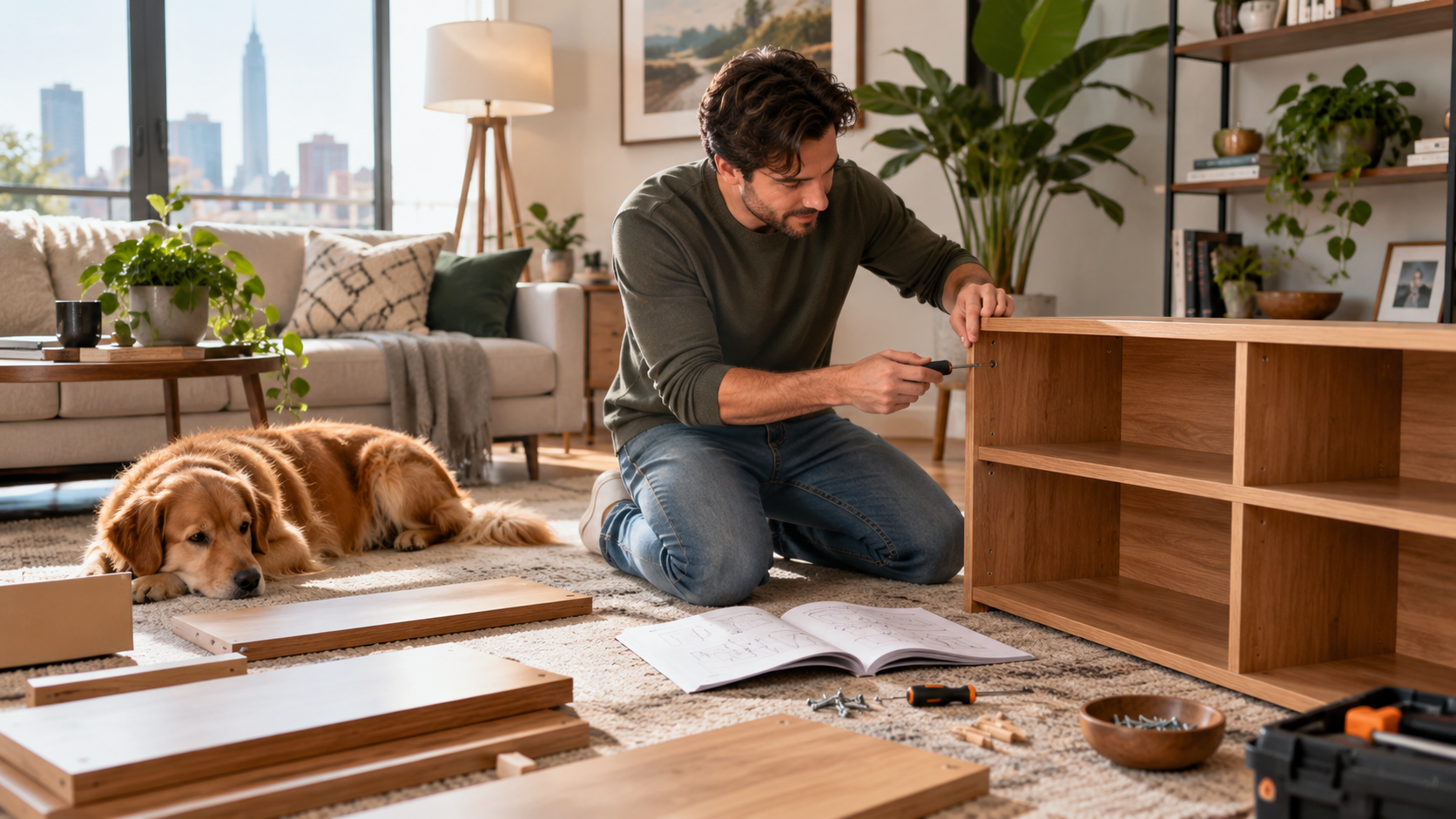

Buying furniture online is easy. Getting three heavy boxes upstairs, finding the correct screws, holding a six-foot panel steady, and discovering on step 27 that one shelf is backwards? Less fun.
That is where furniture assembly services come in.
If you have been searching for Angi furniture assembly, you are probably trying to answer a pretty practical question: can you hire someone through Angi to put your furniture together, and is it worth paying for?
For many U.S. households, the answer can be yes. Angi is a home-services platform that helps consumers find professionals for many types of household work. Furniture assembly falls into the sort of handyman and home-service work that homeowners and renters often hire out rather than spending half a Saturday wrestling with an Allen key.
But there are a few things worth knowing first.
The final price can depend on the furniture, the amount of work, your location, whether wall mounting is involved, how many pieces need assembly, and the individual professional handling the job. Service options can also vary by area.
So this guide is less about promising one magic price and more about helping you book intelligently.
What is Angi furniture assembly?
When people say Angi furniture assembly, they usually mean hiring a furniture-assembly or handyman professional found through Angi to assemble ready-to-build furniture in their home.
That can include items from IKEA, Wayfair, Amazon, Walmart, Target, West Elm, CB2, office-furniture sellers, children’s furniture brands, and plenty of other retailers.
The actual work may be simple or surprisingly involved.
A basic dining chair might take minutes. A large wardrobe with drawers, mirrored doors, adjustable shelves, wall anchors, and twenty different fasteners is basically a small construction project wearing a nicer outfit.
Common furniture assembly jobs include:
- beds and bed frames;
- dressers and nightstands;
- bookcases and shelving units;
- desks and office furniture;
- dining tables and chairs;
- TV stands and media consoles;
- wardrobes and armoires;
- nursery furniture;
- storage cabinets;
- outdoor furniture.
Some professionals may also handle wall anchoring, mounting, minor adjustments, furniture disassembly, or moving pieces into position.
Those extras matter, because they can change both the scope and the price.
Why hire someone instead of assembling it yourself?
There is nothing wrong with assembling furniture yourself.
For a small side table, it may take twenty minutes and save you money.
But furniture assembly becomes a different story when the boxes are heavy, the instructions are vague, or one mistake means dismantling half the piece again.
Professional assembly can make sense when:
- the furniture is large or heavy;
- you have several pieces to assemble at once;
- the item needs to be secured to a wall;
- you do not own the necessary tools;
- the instructions are unusually complicated;
- you have limited time;
- you have mobility or lifting limitations;
- the piece would be expensive to damage.
There is also a quieter benefit: someone who assembles furniture regularly tends to recognize problems faster.
An experienced assembler may notice that two panels are reversed before thirty screws go in.
That sounds minor until you have personally removed thirty screws at 11:30 p.m.
How does booking through Angi generally work?
The exact booking flow can vary depending on the service and market, but the basic idea is straightforward.
You describe the job, provide information about what needs to be assembled, and connect with an available professional or service option.
You may be asked for details such as:
- your ZIP code;
- the type of furniture;
- how many pieces need assembly;
- the furniture brand or model;
- whether wall mounting is needed;
- your preferred appointment date;
- photos or other project details.
The more accurate your description, the better.
“Assemble one dresser” sounds simple.
“Assemble a six-drawer dresser, still boxed, on the second floor, then secure it to drywall” tells the professional much more about the job.
That detail can reduce surprises when the appointment starts.
How much does Angi furniture assembly cost?
There is no single price that applies to every Angi furniture assembly job.
Furniture assembly pricing in the U.S. can be structured several ways. Some professionals charge hourly. Others quote per item. Larger projects may receive a flat project price.
Your location matters too. Labor rates in San Francisco, New York City, Seattle, Boston, or Los Angeles may differ from rates in smaller markets.
Then there is the furniture itself.
A basic coffee table and a large modular wardrobe are both technically “furniture assembly,” but the labor involved is nowhere near the same.
| Project factor | Why it affects price |
|---|---|
| Furniture size | Larger pieces usually take longer and may need two people |
| Number of pieces | Multiple items increase total labor time |
| Complexity | Drawers, doors, hinges and adjustable systems add work |
| Wall anchoring | May require hardware, measuring and suitable wall attachment |
| Location | Local labor rates vary across U.S. markets |
| Access | Stairs, tight rooms or difficult parking may slow the job |
| Disassembly | Removing old furniture adds another task |
| Cleanup | Breaking down packaging or hauling materials away may cost extra |
If you want a useful quote, give the professional enough information to estimate the job properly.
Photos are often more helpful than long descriptions.
A picture of the boxes, the room, and the product label can answer a lot of questions quickly.
Hourly pricing versus per-item pricing
Both can make sense.
Hourly pricing works well when the exact amount of work is uncertain or when you have several unrelated pieces.
Per-item pricing is easier to understand when the job is predictable.
For example, a professional may feel comfortable quoting a fixed amount to assemble a standard bed frame because they already know roughly how long it should take.
A custom modular storage system with sixteen boxes? That may be harder to price without seeing the project.
| Pricing style | Works well when | What to ask |
|---|---|---|
| Hourly | You have several items or uncertain work | Is there a minimum number of hours? |
| Per item | The furniture type is standard and predictable | What exactly is included? |
| Flat project price | You have a larger multi-item assembly job | Does the price include wall anchoring and cleanup? |
The cheapest-looking quote is not automatically the cheapest final job.
A slightly higher flat price may include tasks that another provider charges separately.
What furniture is usually hardest to assemble?
Large wardrobes are high on the list.
They combine heavy panels, multiple doors, hinges, shelves, drawers, alignment work, and sometimes wall anchoring.
Storage beds can also become time-consuming because the frames may include drawers, lifting mechanisms, or internal supports.
Then there are modular office systems.
A desk alone is not too bad. A desk plus two drawer units, overhead storage, cable management, shelves, and a matching cabinet is another story.
Children’s furniture deserves care too.
Cribs, bunk beds, dressers, and tall storage units need to be assembled correctly. Some pieces also require anti-tip anchoring according to their instructions.
This is one area where “it looks stable enough” is not a great standard.
Should furniture be anchored to the wall?
Some furniture should be.
Tall dressers, bookcases, wardrobes, and other top-heavy pieces can create tip-over hazards. Manufacturers often include anti-tip hardware and instructions for securing furniture.
Follow the manufacturer’s instructions.
This matters especially in homes with children.
Wall anchoring is not simply a matter of driving a random screw into drywall. The correct method depends on the wall construction, furniture design, supplied hardware, and location of studs or appropriate anchors.
If anchoring is important to your project, mention it before the appointment.
Do not assume it is automatically included in basic assembly.
What should you do before the assembler arrives?
A little preparation can make the appointment much faster.
You do not need to unpack every screw and line it up like a surgical tray. In fact, keeping hardware organized in the manufacturer’s packaging may be better.
But clear the room.
Give the assembler enough floor space to lay panels flat and move around them.
If a queen bed is being assembled, imagine the bed frame lying on the floor plus room for a person to walk around it. That is roughly the space needed.
Also check that every box has arrived.
Flat-pack furniture is often shipped in multiple cartons. Nothing derails assembly faster than discovering that box 2 of 3 is still somewhere in a delivery warehouse.
Keep the furniture in the room where it will live
If possible, yes.
Assembled furniture can be much harder to move than boxed furniture.
A wardrobe may fit through the bedroom doorway as six flat boxes but not as a fully assembled unit.
A large desk may become awkward to carry around a hallway corner.
So before the appointment, get the boxes into the correct room if you can safely do so.
If they are too heavy, tell the professional.
Do not injure your back trying to save ten minutes of assembly time.
Should you open the boxes before the appointment?
Usually, there is no need unless the service provider asks you to.
Leaving parts packaged can make inventory easier.
Small hardware bags are especially easy to lose.
That said, checking the exterior labels is smart.
Make sure the model and color are correct.
If the carton is badly damaged, inspect the product before the appointment if possible.
There is little value in paying someone to start building a dresser only to discover that the main side panel was crushed during shipping.
What tools are needed for furniture assembly?
Professional furniture assemblers normally bring basic tools needed for common jobs.
Depending on the piece, that might include screwdrivers, hex bits, a drill or driver, measuring tools, a level, a rubber mallet, clamps, sockets, and wall-anchor tools.
Many flat-pack furniture kits include a tiny hex key.
It technically works.
So does walking from Boston to Miami, but there are faster methods.
A professional driver with the proper bit can make repetitive assembly much quicker, provided torque is controlled carefully so screws are not stripped or overtightened.
Can an assembler fix damaged furniture?
Sometimes, but furniture repair and furniture assembly are not the same service.
If a panel arrives cracked, a hole is drilled incorrectly, or hardware is missing, the best solution may be a replacement part from the manufacturer.
An experienced assembler may be able to correct minor alignment issues or replace generic hardware.
But they cannot magically turn a broken particleboard panel into a factory-new one.
If the furniture is visibly damaged before the appointment, take photos and contact the retailer as soon as possible.
Missing screws are more common than you would think
Sometimes the manufacturer really did forget a part.
Other times the screw is hiding in a fold of cardboard that everyone has already checked twice.
Before declaring a part missing, inspect the packaging carefully.
Some kits place different hardware bags inside drawers, hollow panels, or secondary boxes.
The instruction manual normally includes a parts list.
Count against that list before throwing packaging away.
Can Angi furniture assembly include IKEA furniture?
IKEA furniture is one of the obvious candidates for professional assembly.
The individual pieces are often well designed for home assembly, but larger systems can take considerable time.
A small IKEA nightstand is one thing.
A large wardrobe or storage system is another.
If you are booking help for IKEA furniture, provide the exact product name or model if available.
That gives the professional a much clearer idea of the work involved.
What about Wayfair and Amazon furniture?
The same idea applies.
Furniture sold through large online marketplaces comes from many different manufacturers, so assembly quality and instructions vary enormously.
One desk may have beautifully labeled hardware and clear diagrams.
Another may arrive with fourteen nearly identical screws and instructions that appear to have been drawn during an earthquake.
Send the product listing or model information to the assembler when possible.
Knowing the exact item can help them plan the job.
Can you book assembly for multiple pieces?
Absolutely. In fact, this is often when professional assembly starts to make the most sense.
Imagine moving into a new apartment and having:
- one bed frame;
- two nightstands;
- one dresser;
- one dining table;
- four chairs;
- one desk;
- one bookcase.
That is not a quick evening project anymore.
It is basically furniture assembly day.
When requesting a quote, list every piece rather than writing “several items.”
The professional may schedule more time or bring a second person if needed.
Will the assembler move furniture too?
Do not assume so.
Assembly and moving are separate types of work.
A professional may happily slide a completed dresser into position. Carrying a 200-pound wardrobe up two flights of stairs is another matter.
If boxes need to be moved from a garage, lobby, basement, or delivery area, mention that before booking.
Also mention stairs.
Always mention stairs.
What about old furniture?
If the new piece is replacing something, you may need the old furniture disassembled first.
Some professionals may offer this service, but it adds time.
Hauling the old furniture away is another question entirely.
Do not assume disposal is included.
If you need disassembly plus removal, state that when describing the project so the professional can tell you what is possible.
Does furniture assembly include packaging cleanup?
Maybe, depending on the service arrangement.
Furniture creates an absurd amount of cardboard.
One modest dresser can leave behind enough packaging to make your living room look like a recycling center.
Some assemblers may break boxes down and place them where you want.
Actual removal or disposal may be separate.
Ask before the appointment if this matters to you.
How long does furniture assembly take?
It varies enormously.
A simple chair or side table may be quick.
A bed could take considerably longer.
A large wardrobe can occupy a professional for hours.
The speed also depends on packaging, room size, product quality, instructions, missing pieces, wall anchoring, and whether the furniture is being assembled alone or as part of a larger project.
Do not plan a dinner party thirty minutes after your wardrobe appointment starts.
Give the project some breathing room.
Should you stay home during the appointment?
Follow whatever access and service arrangements have been agreed upon.
If you are home, you do not need to hover over the assembler.
Give them room to work.
But be available for practical decisions.
Where exactly should the desk face?
Which wall should the bookcase sit against?
Do you want the adjustable shelves evenly spaced or arranged around particular objects?
Those little choices are easier to answer before the final screws are tightened.
Do you need to tip a furniture assembler?
Tipping practices for home-service professionals vary in the United States.
A tip is not necessarily expected in the same way it is at a restaurant.
But some customers choose to tip when the professional handles an unusually difficult job, works carefully, helps with an extra small task, or simply provides excellent service.
If you prefer not to tip, a positive review can still be meaningful.
For independent home-service professionals, detailed positive feedback may help future customers feel more comfortable hiring them.
What should you check before the assembler leaves?
Take a few minutes and inspect the furniture.
Open every drawer.
Open every door.
Sit on the chair.
Check whether the table rocks.
Look at gaps between cabinet doors.
Confirm that the bed frame feels stable.
If furniture was anchored, inspect the attachment.
Small alignment adjustments are much easier while the professional is still standing in the room.
Watch for these signs of poor assembly
A completed piece should not merely look finished from ten feet away.
It should function correctly.
Potential warning signs include:
- doors that scrape or refuse to close;
- drawers that bind;
- loose joints;
- visible gaps where panels should sit flush;
- wobbling tables or chairs;
- unused structural hardware;
- screws visibly driven at bad angles;
- furniture leaning noticeably out of level.
Not every tiny gap indicates bad workmanship.
Some inexpensive furniture has manufacturing tolerances that make perfect alignment difficult.
But the piece should still be safe and usable.
Assembly cannot fix poor manufacturing
This distinction matters.
A professional can assemble furniture correctly and still end up with a drawer that has an uneven reveal because the factory drilled one panel slightly wrong.
Mass-produced flat-pack furniture is not custom cabinetry.
If parts are warped, chipped, drilled incorrectly, or manufactured out of square, the assembler may have limited ability to correct them.
That is not automatically an assembly failure.
Furniture assembly in apartments
Apartment jobs come with their own little set of complications.
Parking may be limited.
Building access may require a concierge or key code.
Elevators may need reservations.
Some buildings have service-hour rules.
If you live in a high-rise, provide access information ahead of time.
A professional spending twenty minutes trying to get through the loading entrance is not a great start for anyone.
Furniture assembly after moving
Moving day and assembly day sound like the same thing, but separating them can sometimes be easier.
Movers can bring boxes and furniture into the correct rooms.
Then an assembler can work once the space is quieter.
If you want assembly on moving day, coordinate carefully.
Trying to build a bed while movers carry fifty boxes through the same bedroom is possible.
It is not peaceful.
Home office furniture assembly
This has become a substantial category of furniture work.
Standing desks, drawer units, bookshelves, monitor shelves, file cabinets, and office chairs often arrive in pieces.
Standing desks deserve particular attention because they may contain motors, control boxes, cables, and heavy desktop surfaces.
Follow the manufacturer’s electrical and assembly instructions closely.
If cable management matters to you, tell the professional before the desk is pushed against the wall.
Nursery furniture assembly deserves extra care
Cribs, changing tables, dressers, and storage furniture should be assembled according to the manufacturer’s instructions.
Do not substitute random hardware or improvise structural changes.
If furniture includes an anti-tip device, install it as directed.
Also keep product information and instructions after assembly.
They may be useful later for adjustments, conversion kits, replacement parts, or recalls.
Bunk beds are not the place for guesswork
Bunk beds carry loads above the floor, which makes correct assembly particularly important.
Guardrails, ladders, fasteners, support slats, and mattress-thickness requirements all matter.
Use the manufacturer’s instructions and do not remove safety components because they interfere with the room’s look.
If you are hiring someone through a platform for a bunk-bed project, make it clear what the item is when you book.
Outdoor furniture assembly
Patio sets seem simple until you are lying on concrete trying to line up a bolt underneath a sectional sofa.
Outdoor assembly can include dining tables, loungers, storage boxes, sectional seating, pergola-style products, and patio cabinets.
Large outdoor structures may fall outside ordinary furniture assembly and require a different service category.
Again, describe the product accurately.
“Outdoor furniture” could mean four chairs.
It could also mean a twelve-foot structure with fifty pieces.
What makes a good furniture assembler?
Speed is useful, but it is not everything.
You want someone who reads the instructions, protects floors, organizes hardware, checks alignment before tightening everything, and does not force parts that clearly do not fit.
Furniture assembly is full of moments where patience saves time.
Tightening every screw fully at the beginning can make later alignment impossible.
Experienced assemblers often leave connections slightly loose until major pieces are aligned, then tighten them in sequence.
It is a small technique that makes a big difference.
Questions to ask before booking
You do not need to interview someone like you are hiring a general contractor for a six-month renovation.
But a few questions are useful.
- Is the price hourly or fixed?
- Is there a minimum service charge?
- Does assembly include wall anchoring?
- Can you assemble this specific brand or model?
- Do you bring the necessary tools?
- Is moving the boxes into the room included?
- Can you disassemble the old furniture?
- Is packaging cleanup included?
- What happens if parts are missing or damaged?
Clear expectations make the whole appointment easier.
Is Angi furniture assembly worth it?
That depends on the furniture and how you value your time.
If you enjoy building things, have tools, and are assembling one simple item, paying someone else may not make much sense.
If nine flat-pack boxes are staring at you from across the room, the calculation changes.
Professional assembly can be especially useful for large wardrobes, multiple-room setups, office furniture, beds, storage systems, and pieces requiring anchoring.
You are paying for labor, but you are also paying to avoid the learning curve.
And sometimes that is the better deal.
FAQ about Angi furniture assembly
Can I find furniture assembly help through Angi?
Angi connects U.S. consumers with professionals across many home-service categories, including handyman-type work that can cover furniture assembly. Exact service options and availability may vary by location.
How much does Angi furniture assembly cost?
There is no single nationwide price for every project. Cost depends on the furniture, number of pieces, local labor rates, complexity, access, wall anchoring, and whether extra services are needed.
Can someone assemble IKEA furniture for me?
Yes, professional furniture assemblers commonly work with flat-pack furniture, including IKEA products. Providing the exact model or product name makes estimating the job easier.
Will the assembler bring tools?
Professional assemblers generally bring basic tools needed for typical furniture projects. If your item needs unusual hardware, wall mounting, or specialty equipment, mention that before the appointment.
Can furniture assembly include wall anchoring?
It may, but do not assume it is included automatically. Tell the professional if a dresser, bookcase, wardrobe, or other piece needs to be secured to the wall.
Should I tip a furniture assembler?
Tipping is generally optional for home-service work. Some customers tip for excellent service or unusually difficult jobs, while others leave a detailed positive review instead.
Should I unpack the furniture before the assembler arrives?
Usually not unless requested. Keeping parts organized in their original packaging can actually help. Do make sure every carton has arrived and clear enough space for the assembly work.
Conclusion: the real value is getting your room finished
Furniture assembly looks easy when you are scrolling through product photos.
The bed is perfect.
The dresser is styled with a vase.
The desk has one tasteful notebook and absolutely no cables.
Then delivery day arrives.
Instead of furniture, you have cardboard.
A lot of cardboard.
And somewhere inside it are seventy-three pieces that allegedly become the lovely object from the website.
This is where hiring help starts to feel pretty reasonable.
Angi furniture assembly can be a useful route for people who would rather hire a professional than spend hours working through instructions themselves.
But the key is describing the job properly.
Do not just say “dresser.”
Say it is a six-drawer dresser.
Say whether it is already in the bedroom.
Say whether the room is upstairs.
Say whether wall anchoring is needed.
If you know the product model, provide it.
If you have photos, even better.
That information helps the person doing the job estimate time and arrive prepared.
And preparation on your side matters too.
Clear the space.
Make sure every package has arrived.
Do not throw away hardware because the little plastic bag looked empty.
Keep children and pets away from the immediate work area.
Know where the finished piece should go.
That may sound obvious, but deciding halfway through assembly that the wardrobe actually belongs on the opposite wall is not ideal.
Wall anchoring deserves special attention.
Furniture tip-over risks are real, particularly with tall storage furniture.
If the manufacturer provides an anti-tip system, treat it as part of the assembly rather than an optional leftover part.
And if you want a professional to install it, say so before they arrive.
The wall type matters.
Drywall, masonry, and other wall assemblies may require different fasteners or anchoring methods.
Then there is price.
Furniture assembly is one of those services where a single national number is not especially helpful.
A side table and a wall-sized wardrobe do not belong in the same pricing conversation.
Neither do one chair in rural Ohio and an eight-piece apartment setup in Manhattan.
Focus on scope.
What is being assembled?
How many pieces?
How difficult are they?
Are stairs involved?
Does anything need mounting?
Is old furniture being removed?
Is packaging disposal included?
Once those questions are answered, the quote means much more.
It is also useful to think about what you are really paying for.
Yes, you are paying someone to turn screws.
But that is not the whole thing.
You are paying for someone who has probably seen cam locks before.
Someone who knows not to tighten every connection fully before the frame is square.
Someone who notices the left drawer runner is actually the right drawer runner.
Someone who owns more than the tiny Allen key supplied in the box.
Experience turns a frustrating puzzle into routine work.
That does not mean every project needs a professional.
If you have one basic nightstand, build it yourself if you want.
Put on music.
Make coffee.
There is a certain satisfaction in finishing it.
But if you have just moved and the living room contains twelve boxes of furniture, nobody is awarding points for suffering.
Hire help if it makes your life easier.
The same goes for furniture that is heavy, expensive, or safety-sensitive.
A bunk bed is different from a plant stand.
A tall bookcase is different from a stool.
A motorized standing desk is different from a simple writing table.
Treat each project according to what it actually requires.
After assembly, inspect everything.
Do not feel awkward about it.
Open the drawers.
Move the doors.
Check the hinges.
Look at the back panel.
Make sure the table is stable.
If the furniture has adjustable feet, confirm it is level.
If it was anchored, look at the anchor point.
It is far easier to correct a small issue while the assembler is still there.
Keep the instructions too.
You may need them months later when you move the shelves, order a replacement part, disassemble the furniture, or wonder why one mysterious screw was left in a bag.
And yes, sometimes there really is an extra screw.
Manufacturers occasionally include spares.
That does not mean your bed is secretly missing a structural component.
Probably.
If you are using Angi or any similar service platform, reviews can also help you evaluate professionals.
Look for feedback relevant to the kind of job you have.
Someone may have excellent reviews for general handyman work but limited experience with complicated modular furniture.
For a straightforward table, that may not matter.
For a giant storage system occupying an entire bedroom wall, experience becomes more valuable.
Communication matters as much as ratings.
If someone asks sensible questions about your project before booking, that is generally useful.
They are trying to understand what will be waiting for them.
That helps avoid situations where a one-hour appointment turns out to be a four-hour project.
The best furniture assembly appointment is fairly uneventful.
The professional arrives.
The pieces are there.
The room is clear.
The furniture gets built.
Doors line up.
Drawers slide.
The packaging gets moved aside.
And suddenly the room looks like the room you thought you were buying when you clicked “Add to Cart.”
That is really the appeal.
Furniture assembly is not glamorous.
But having the bed ready before bedtime?
That feels pretty luxurious.