
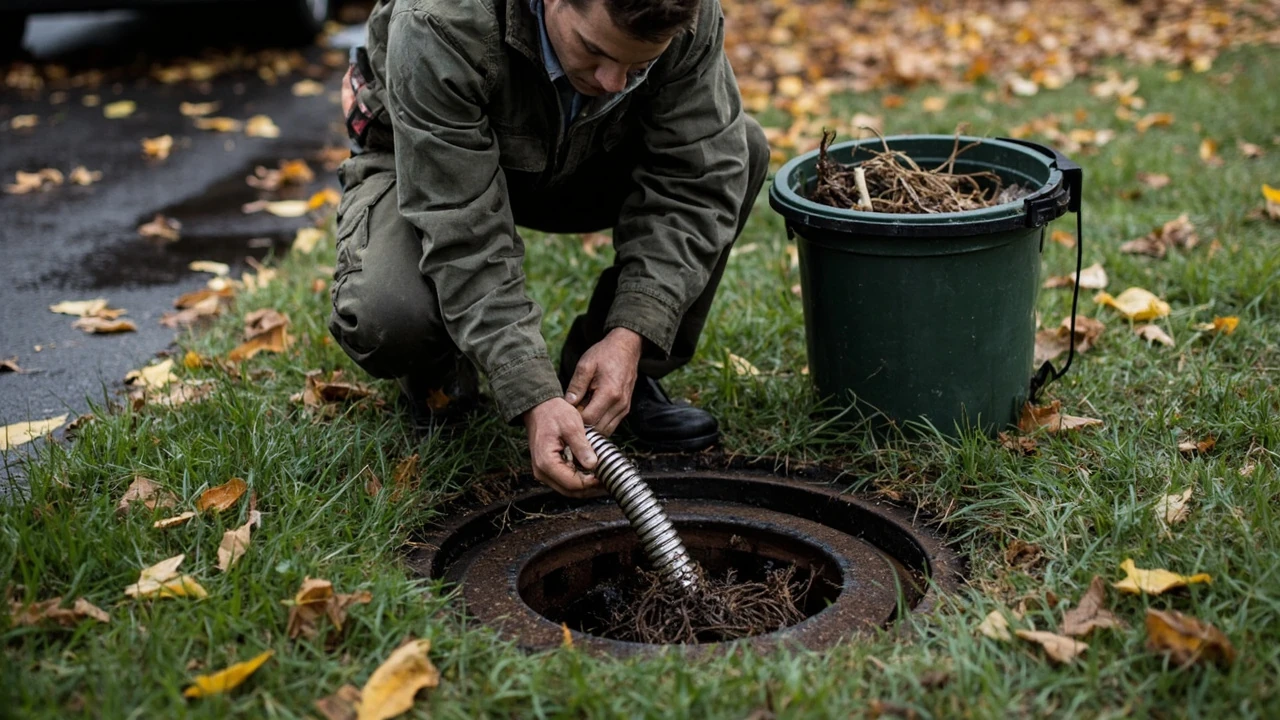

Outdoor drain cleaning services: what homeowners actually need to know
A storm rolls through overnight, and by morning a shallow pool of water is sitting on the driveway where it should be draining in seconds. The curb drain is half-buried in leaves, the channel drain by the garage is slow, and somewhere near the back patio a low spot has turned into a permanent puddle. This is the moment most homeowners start searching for outdoor drain cleaning services, and it is also the moment a small maintenance problem can quietly turn into foundation moisture, landscape erosion, or a soggy basement.
Outdoor drain cleaning services cover a wider range of work than most people expect. They include clearing leaves and silt from yard drains, jetting sediment out of channel drains, cutting roots out of perimeter French drains, and restoring flow in driveway and curb drains. The right service depends on the type of drain, what is blocking it, and how the surrounding landscape directs water. This guide walks through how these services work, what a homeowner can safely try first, when it is time to call a professional, and how to keep outdoor drains clear once they are flowing again.
What counts as an outdoor drain
Before talking about cleaning, it helps to separate the drains that sit outside a home. They look similar from above, but they handle different volumes of water, sit at different depths, and fail in different ways. Outdoor drain cleaning services are usually built around one of these common types:
- Yard drains — round grates set into the lawn or landscape to collect surface water and route it to a buried line.
- Channel drains — long, narrow troughs with a grate on top, often installed across driveways, in front of garage doors, or along patios.
- French drains — perforated pipe surrounded by gravel, used to lower the water table or move groundwater away from foundations.
- Curb drains — small openings at the edge of a driveway that connect to the street or storm system.
- Downspout and sump lines — extensions that carry roof water or sump pump discharge away from the house, often ending at a pop-up emitter or a dry well.
Each of these drains has a different failure mode. A channel drain usually slows down because of grit and leaves packed under the grate. A French drain tends to clog with fine sediment and root intrusion over many years. A yard drain often backs up after a single storm drops more debris than the basin can hold. Outdoor drain cleaning services that treat all of these the same way will underperform, which is why a short diagnosis before cleaning pays off.
How outdoor drains get clogged in the first place
Most outdoor drain blockages are not random. They build up in predictable ways, and the pattern often tells a homeowner or technician what to expect once the line is opened.
The most common contributors are:
- Organic debris. Leaves, pine needles, grass clippings, and mulch are the top cause of slow outdoor drains. They form a dense mat over grates and inside basins.
- Sediment and silt. Fine soil, sand, and decomposed granite wash into the system and settle in low points. Over time, this reduces the pipe diameter and slows flow.
- Root intrusion. Tree and shrub roots are drawn to the moisture and nutrients inside drain lines. They enter through small joints and gradually form a web that traps debris.
- Grease and soap residue. Outdoor kitchens, car washing areas, and driveway wash-downs can push fats, soap, and detergents into the line, where they combine with sediment to form a hard, cement-like layer.
- Pipe damage. Crushed, bellied, or offset sections of pipe create a spot where debris collects. Even a well-cleaned line will clog again quickly if the pipe itself is damaged.
Seattle-area plumbers who handle this work describe buildup that “hardens like cement” inside outdoor lines after months of rain washing organic material and silt into the system. The same pattern shows up anywhere with mature landscaping, deciduous trees, or clay-rich soil.
Warning signs that a drain needs service
Outdoor drains almost never fail all at once. They give a series of small, easy-to-miss clues first. Acting on these clues is the cheapest way to avoid a real backup.
Watch for:
- Standing water that takes more than a few minutes to recede after rain.
- Gurgling or gulping sounds from grates during a storm.
- A sour, earthy, or sulfur smell coming from drains, which usually means organic material is sitting and decomposing inside the line.
- Wet stripes or algae growth along the path of a buried line, especially in dry weather.
- Water stains, mildew, or a damp basement after heavy rain.
- Mosquitoes breeding in standing water around a drain that is not draining.
When two or more of these show up at the same time, the system is telling a homeowner that the next storm will probably push it over the edge. Calling outdoor drain cleaning services at that point is usually faster and cheaper than waiting for an emergency call after a backup.
What homeowners can safely do before calling a service
Not every slow drain needs a professional. A light clog near the surface can often be cleared with simple tools and a little caution. The goal is to remove obvious debris without pushing it deeper into the line or damaging the pipe.
Safe first steps include:
- Clear the grate and basin by hand. Lift the grate, pull out leaves and silt, and rinse the basin with a garden hose. Wear gloves; the contents are usually unpleasant.
- Flush with a hose. Feed a hose into the drain and run water at full pressure for several minutes. If flow improves and the water runs clear, the clog was near the inlet.
- Try a hand auger on short, shallow lines. A small drum auger can break up a clog a few feet into a channel or yard drain. Stop if you hit a hard obstruction; that is usually a crushed pipe or a solid root mass.
- Check the outlet. Make sure the daylit outlet, pop-up emitter, or curb opening is actually open. Many “clogs” are simply a closed or buried outlet.
- Avoid chemical drain cleaners. Most over-the-counter drain openers are designed for indoor traps, not for outdoor pipes surrounded by soil. They rarely clear heavy outdoor buildup and can damage older pipe materials.
If water still pools, the drain backs up again within a day, or the smell returns, the clog is beyond the basin. At that point, outdoor drain cleaning services with mechanical or hydro-jet equipment are the safer and more lasting option.
How professional outdoor drain cleaning services actually work
A good outdoor drain service follows a fairly predictable sequence. The exact tools depend on the drain type and the severity of the clog, but the workflow stays similar.
1. Site assessment and diagnosis
The technician walks the property, locates each drain, and looks for surface clues such as pooling water, soggy ground, or obvious damage. They also identify where the line goes: to a street connection, a dry well, a pop-up emitter, or a storm system. This step matters because it tells the technician what kind of equipment the line can handle.
2. Camera inspection when needed
For recurring clogs or slow lines, a push camera is fed through the pipe to confirm the cause. The video shows whether the problem is sediment, a root mass, a belly, or a break. Without this step, a technician is guessing, and outdoor drain cleaning services that skip inspection often clean the same line two or three times before the real issue shows up.
3. Mechanical cleaning
A powered drain machine or a sectional rod is used to break up roots, pull out compacted debris, or open a solid clog. Mechanical cleaning is the workhorse for most outdoor lines because it physically removes material rather than just pushing it downstream.
4. Hydro jetting for long-term flow
Hydro jetting uses a high-pressure water hose with a specialized nozzle to scour the inside of the pipe. The water pressure is adjusted for the pipe material so it cleans thoroughly without damaging the line. Jetting is especially useful for lines that have heavy sediment, grease residue, or recurring root intrusion, because it washes the wall of the pipe clean instead of just poking a hole through the clog.
5. Final test and recommendations
After cleaning, the line is flushed and, in many cases, re-inspected with a camera. The technician then reports what was found and what, if anything, the homeowner should change. That might include trimming a tree, adding a larger grate, or scheduling a yearly cleaning before the rainy season.
Comparing the main cleaning methods
For homeowners in the Pacific Northwest, providers such as Jafco’s outside drain clearing service illustrate what a focused outdoor drain service looks like in practice: a local team that knows regional rainfall patterns, uses hydro jetting and inspection tools, and schedules work around the wet season rather than only responding after a storm.
Homeowners comparing outdoor drain cleaning services will usually be offered one of three methods. The table below shows how they differ in practice.
| Method | Best for | How it works | Limitations |
|---|---|---|---|
| Hand clearing and hose flushing | Light surface clogs, routine maintenance | Removing grate debris and flushing the basin with a garden hose | Cannot reach deeper blockages or remove hardened buildup |
| Mechanical auger or rodder | Solid clogs, root masses, compacted debris | A powered cable or sectional rod breaks up and pulls out material | Punches a path through the clog rather than cleaning the pipe wall |
| Hydro jetting | Heavy sediment, grease, long-term maintenance | High-pressure water scours the full inside diameter of the pipe | Requires access for the jetter and trained pressure control for older pipe |
| Camera inspection | Diagnosing recurring or unexplained clogs | A push camera records the inside of the line to confirm cause | Does not clear the clog on its own; usually paired with cleaning |
Most outdoor drain cleaning services combine these methods rather than choosing just one. A typical job might start with a camera, move to mechanical clearing for a root mass, and finish with hydro jetting to restore full pipe diameter.
How often outdoor drains need to be cleaned
There is no single schedule that fits every home. The right interval depends on the landscape, the age of the system, and how the drains are used. A general rule of thumb used by many technicians is once a year, in the fall before the wet season, for most homes. Properties with heavy tree cover, nearby construction, or a history of root intrusion often need more frequent service.
Useful intervals to consider:
- Annually — most homes with mature landscaping and average leaf fall.
- Twice a year — properties with heavy tree cover, eucalyptus, pine, or deciduous trees that drop debris in two waves.
- Every one to two years — newer systems with limited tree cover and clean roof runoff.
- After a major storm — if a large storm drops more debris than usual, a quick visual check and grate cleaning can prevent a bigger service call later.
The point of a regular service is not just to clear clogs. It is to keep the pipe wall clean so flow stays high and small problems do not turn into emergency calls.
What a good outdoor drain cleaning service looks like
Not every provider delivers the same result. A few questions and checks can help a homeowner compare options before booking.
| What to look for | Why it matters | What to ask or check |
|---|---|---|
| Inspection before cleaning | Confirms the real cause and avoids repeat visits | Ask whether a camera inspection is included or available |
| Pressure matched to pipe | Older clay or thin-wall pipe can be damaged by high pressure | Ask how jetting pressure is set for the specific pipe material |
| Clean-out access | Reduces digging and speeds up the job | Ask whether the system has a clean-out and where it is |
| Root treatment options | Roots return if the line is not treated after cutting | Ask whether a root inhibitor or follow-up plan is offered |
| Written findings | Makes it easier to plan future work and compare bids | Ask for a short written summary of what was found and cleaned |
Homeowners in the Seattle area, for example, often look for a local provider that handles outdoor drain clearing across the metro and is comfortable working in heavy rain. The same idea applies anywhere: a service that knows the regional weather, soil, and common pipe materials tends to be more efficient than a generalist.
What outdoor drain cleaning services typically cost
Because this page avoids invented prices, the most useful approach is to describe what drives cost rather than publish a number that may be wrong. A few factors consistently shape what a homeowner pays:
- Number of drains — a single yard drain is a smaller job than a full system of yard, channel, and curb drains.
- Access — lines with a usable clean-out are faster to clear than lines that require pulling a toilet or digging to reach.
- Severity of the clog — light surface debris is quick to clear; heavy root masses or hardened sediment take longer and may require jetting.
- Inspection needs — adding a camera inspection increases the total but usually pays for itself by avoiding repeat visits.
- Region and timing — emergency or after-hours calls, plus regional labor rates, affect the final bill.
The best way to compare providers is to ask each one to break their quote into diagnosis, cleaning, and any recommended follow-up. That structure makes it easier to see whether the scope actually matches the problem.
Common mistakes that lead to repeat clogs
Even a thorough cleaning can be undone quickly if a few common habits stay in place. Homeowners who find themselves calling outdoor drain cleaning services every year often fall into one or more of these patterns:
- Rinsing yard debris into the drain. Sweeping leaves, grass clippings, or mulch toward a drain pushes the exact material that causes clogs into the line.
- Connecting roof downspouts to small yard drains. A 2-inch yard drain is not designed to handle the volume of water from a full roof valley. The mismatch shows up the first time it rains hard.
- Planting thirsty trees directly over a drain line. Willows, poplars, maples, and several fruit trees send roots straight toward the moisture inside a pipe.
- Skipping grate maintenance. A grate buried under leaves cannot accept water. The drain technically works, but the water never gets in.
- Ignoring slow drains. A drain that takes two minutes to clear today will take ten minutes after the next storm. Small slowdowns rarely fix themselves.
Adjusting these habits, even partially, usually extends the time between professional cleanings and reduces the urgency of every service call.
When an outdoor drain problem is really a bigger issue
Sometimes a slow outdoor drain is the symptom of something larger. Outdoor drain cleaning services will clear the line, but they cannot fix an underlying cause that keeps recreating the problem. A few situations worth flagging:
- Foundation moisture or a wet basement. If water is finding its way into the basement whenever the yard drain is slow, the issue is grading and drainage, not just a clogged pipe.
- Soggy ground or sinkholes along the line. This often points to a broken or bellied pipe that is leaking water into the surrounding soil.
- Recurring backups in the same spot. If the same section keeps clogging, the pipe may be crushed, offset, or partially collapsed.
- Stormwater pooling against the house. This is a grading and gutter issue more than a drain issue, and clearing the drain alone will not solve it.
A good outdoor drain cleaning service will mention these situations when they find them and may recommend a landscape contractor, a foundation repair specialist, or a plumber for the underlying problem.
How outdoor drain care fits with broader home maintenance
Outdoor drains sit at the bottom of a system that starts at the roof. Roof gutters, downspouts, surface grading, and underground lines all share the same goal: move water away from the house before it causes damage. Skipping one part of that chain usually puts more pressure on the others.
A practical annual routine looks like this:
- Clean gutters and downspouts in late fall after leaves have dropped.
- Walk the property during a rainstorm to see where water actually goes.
- Lift and check each outdoor drain grate for debris.
- Schedule a professional outdoor drain cleaning service once a year, or more often if the property has heavy tree cover.
- Note any new soggy spots, smells, or slow drains between visits.
This kind of routine is what keeps outdoor drain cleaning services from turning into emergency calls. Most of the cost of professional drain work comes from reacting to a problem that has been building for months. A short, scheduled check is usually cheaper than a single weekend callout.
Finding outdoor drain cleaning services in your area
Because every region’s weather, soil, and housing stock is different, the right outdoor drain cleaning services for a home are usually local. A few ways to narrow the field:
- Look for companies that list outdoor or exterior drain cleaning as a specific service, not only as a line item under “plumbing”.
- Ask whether the company owns hydro-jetting equipment and inspection cameras, or whether it subcontracts that work.
- Check that the company is comfortable with the specific drain type on the property, whether that is a French drain, a channel drain, or a yard drain.
- Read recent reviews for mentions of clean communication, written findings, and follow-up if a problem returns.
- Ask neighbors with similar homes and landscapes who they use; outdoor drain work is one of the most locally consistent services.
A short homeowner checklist before booking
Before calling a service, a quick walk around the property saves time on the phone and helps the technician bring the right equipment.
- Note which drains are slow, backed up, or smelly.
- Check whether the outlet for each line is open and visible.
- Look for standing water, soggy ground, or any new sinkholes.
- Find any clean-out caps and make sure they are accessible.
- Have a rough idea of the home’s age and any known drain work done previously.
Even a few minutes of preparation gives outdoor drain cleaning services a head start, and that usually shows up in the final bill.
Frequently asked questions
How do I know if I need outdoor drain cleaning services or just gutter cleaning?
If water is pooling at ground level around grates, channels, or curb openings, the outdoor drain itself is the problem. If water is spilling over the edge of the gutters or leaking behind them, the issue is usually the gutter system. A quick test is to run a hose near a drain during dry weather; if the drain still does not accept water, the line is the problem.
How often should outdoor drains be cleaned?
Most homes benefit from a professional cleaning once a year, ideally in the fall before the wettest part of the year. Homes with heavy tree cover, nearby construction, or a history of root intrusion may need cleaning every six months. The right interval is the longest one that keeps water moving during a heavy storm.
Can I clear an outdoor drain myself?
Light surface clogs can often be cleared by lifting the grate, removing debris by hand, and flushing the line with a garden hose. A small drum auger can help with shallow clogs a few feet into the line. For deeper clogs, recurring slow drains, or any sign of root intrusion, professional outdoor drain cleaning services are the safer and longer-lasting option.
What is hydro jetting and is it safe for outdoor drains?
Hydro jetting uses a high-pressure water hose with a specialized nozzle to scour the inside of a drain line. It is safe for most modern pipe materials when the pressure is set for that specific pipe, which is why a good service inspects first and adjusts accordingly. Jetting is one of the most effective ways to remove sediment, grease residue, and root remnants.
Do outdoor drain cleaning services handle tree roots?
Most do. Mechanical cutting tools remove the root mass, and hydro jetting clears the remaining fibers from the pipe wall. After cutting, a root inhibitor can slow regrowth, but no method prevents roots permanently. If roots return quickly, the line may have a damaged section that needs repair rather than just cleaning.
Will outdoor drain cleaning fix a wet basement?
It can help, but only if the wet basement is caused by outdoor water pooling and forcing its way toward the foundation. If the basement moisture comes from a high water table, a failed sump pump, or foundation cracks, outdoor drain cleaning will not address the root cause. A broader drainage or foundation assessment is usually the right next step.
What should I ask before hiring an outdoor drain cleaning service?
Ask whether the company offers camera inspection, owns hydro-jetting equipment, and adjusts jetting pressure for older pipe materials. Ask for a written summary of what was found and cleaned, and ask what the recommended interval is for the specific property. Clear answers to these questions usually separate a thorough service from a quick one.
Is it worth paying for a camera inspection?
For a one-time slow drain, a camera inspection is often optional. For any drain that has clogged more than once in a year, or for any drain that backs up shortly after cleaning, a camera inspection is usually worth the cost because it shows whether the real problem is a damaged pipe, a belly, or a heavy root mass that needs more than a basic cleaning.
What can I do to keep outdoor drains clear between services?
Keep grates clear of leaves and debris, avoid rinsing yard waste into drains, and make sure downspouts are not connected to small yard drains that cannot handle roof volume. Trimming back trees near the drain line also reduces the amount of organic material that reaches the system. These small habits extend the time between professional cleanings.
Are chemical drain cleaners safe for outdoor drains?
Most over-the-counter chemical drain openers are designed for indoor traps, not buried outdoor pipes. They rarely clear heavy outdoor buildup and can damage older pipe materials or surrounding soil. Mechanical cleaning, hydro jetting, and root cutting are the standard tools used by outdoor drain cleaning services for good reason.