

Best air duct cleaning services: how to choose a trustworthy provider
Most homeowners do not think about the air ducts running through their walls and attic until something goes wrong. A musty smell when the heat kicks on, visible dust puffing from a supply register, or a family member with persistent allergy symptoms can all be the first concrete clue that the duct system needs attention. The problem is that the air duct cleaning industry is full of national franchises, two-person operations, and outright scams, all claiming to deliver the same result. Sorting out the best air duct cleaning services from the rest takes a bit of homework and a clear sense of what a proper job should include.
This guide walks through what residential duct cleaning actually does, what realistic pricing looks like, which credentials and methods matter, and the specific red flags that should send a homeowner looking for another contractor. It is written for U.S. homeowners who want a practical decision framework, not a sales pitch, and it ends with a checklist that can be used when comparing two or three competing quotes.
What professional air duct cleaning actually does
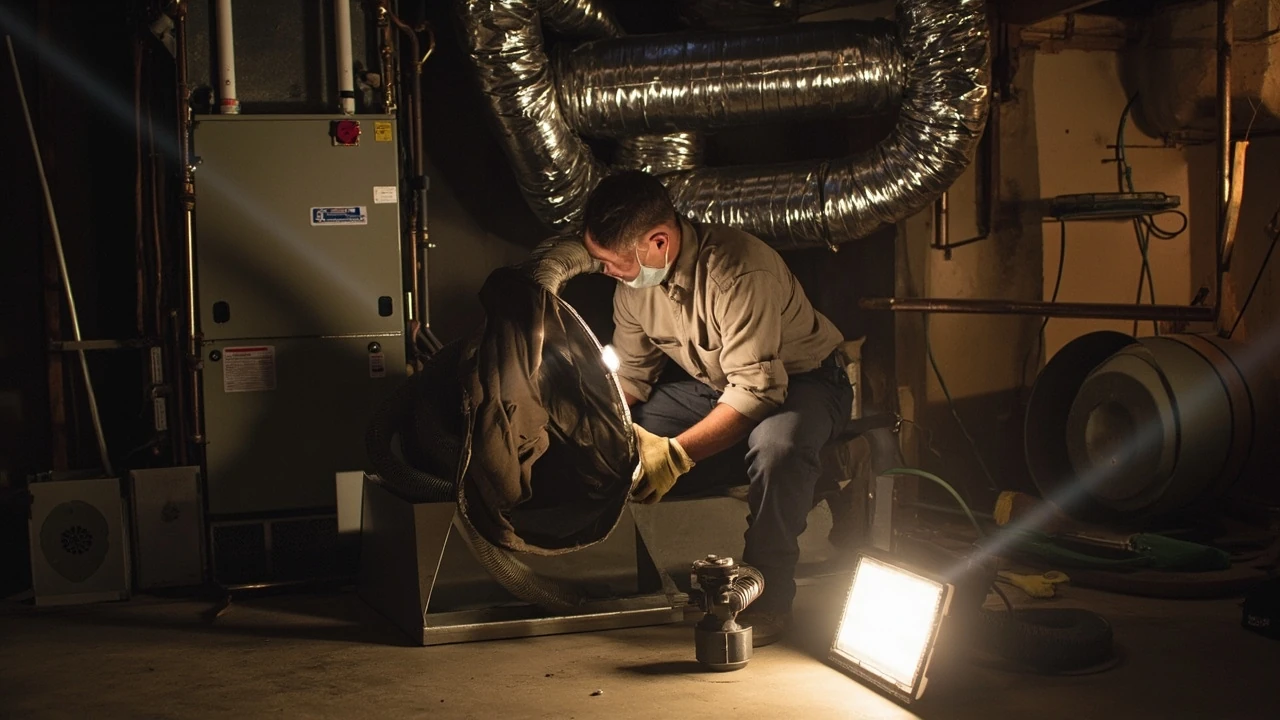
Residential duct cleaning is the mechanical removal of dust, debris, and biological residue from the interior surfaces of a forced-air heating and cooling system. A proper job touches every accessible part of that system, not just the visible grilles. The components typically cleaned include the supply and return ducts, the blower assembly, the evaporator coil housing, the plenum, and the air handler cabinet. The goal is to reduce the amount of material that gets re-circulated through the living space every time the system runs.
The work is done with specialized equipment that most homeowners do not own. The standard industry reference is the National Air Duct Cleaners Association (NADCA), which publishes both cleaning standards and an industry code of ethics. Contractors who follow NADCA’s general specifications use HEPA-filtered vacuum collection, source-removal agitation tools, and sealed access points rather than simply blowing dust around the house with a shop vac.
It is worth noting what a cleaning does not do. It does not seal leaks in the ductwork, repair damaged insulation, or eliminate mold that is growing inside wall cavities. Those are separate scopes of work, and any contractor who claims a routine cleaning will solve a moisture or structural problem is overpromising.
When a cleaning is actually justified
There is a meaningful difference between an industry that encourages routine cleanings every couple of years and the actual evidence base. The U.S. Environmental Protection Agency’s position is that duct cleaning has not been shown to prevent health problems, and that decisions should be made on a case-by-case basis. That does not mean cleanings are useless, only that they should be tied to a specific reason rather than a marketing schedule.
Situations where a homeowner is justified in considering a cleaning include:
- Visible mold growth on the interior surfaces of ductwork, the coil, or other HVAC components
- Infestation of insects, rodents, or other pests inside the duct system
- Excessive dust or debris actually discharging from supply registers
- Post-renovation or post-construction cleanup where drywall dust, sawdust, or silica has entered the system
- Smoke or soot contamination from a fire or a nearby wildfire event
- Unexplained persistent odors that track with the system cycling on and off
If none of those situations apply, a homeowner is usually better off focusing on filter quality, regular filter changes, source control for dust, and routine HVAC maintenance. The single most important habit for keeping ductwork clean is keeping the air filter fresh and properly sized, which traps contaminants before they ever settle on duct walls.
Residential duct cleaning prices: what is fair in 2026
Residential pricing varies widely because homes vary widely. A 1,200-square-foot single-story home with one system and accessible ductwork is a different job than a 4,000-square-foot two-story home with two systems, a basement, and an attic. Geographic labor rates also play a role, with coastal and high-cost-of-living markets running noticeably higher than the national average.
That said, useful reference points do exist. According to the publicly stated ranges from a major U.S. cleaning and restoration provider, residential ductwork cleaning typically runs from roughly $450 to $1,000 depending on the size and complexity of the system, and a normal home takes between two and four hours to complete. The wide spread reflects whether the job includes the air handler, the coil housing, and a sanitizer application, and whether the ductwork is accessible or buried behind finished walls.
The table below summarizes the price ranges a homeowner is most likely to encounter and what drives the cost in each case.
| Home profile | Typical price range (USD) | What usually drives the cost |
|---|---|---|
| Small single-story home, one system, accessible ducts | $300 – $500 | Number of registers and total linear footage of ductwork |
| Average two-story home, one system, basement and attic runs | $450 – $800 | Access difficulty, ladder work, additional supply trunks |
| Large multi-zone home, two systems, complex ductwork | $700 – $1,200+ | Multiple air handlers, longer service time, additional crew |
| Add-on services (coil cleaning, sanitizer, UV light install) | $100 – $400 each | Extra labor hours, consumable products, equipment setup |
Any quote that lands well below $300 for a typical single-family home is worth a careful second look, because the labor and equipment costs of a legitimate job rarely allow it. Conversely, a quote over $1,500 for a standard home is also a flag, often pointing to aggressive upselling, unnecessary add-ons, or franchised brand premiums.
Methods and equipment that separate a real job from a quick one
The core of a proper duct cleaning is source removal: physically dislodging debris from inside the ducts and capturing it with a HEPA-filtered vacuum before it can become airborne again. The most common method, often called the “negative air” or “vacuum truck” method, connects a powerful vacuum to the duct system at the air handler or trunk line. That creates suction throughout the system, and technicians use compressed-air whips, brushes, or hand tools to knock material loose so it gets pulled to the collection device rather than blowing out of the registers.
Two methods show up frequently in marketing, and it helps to understand what they actually mean.
| Method | How it works | Best for | Limitations |
|---|---|---|---|
| Negative air with truck-mounted vacuum | High-suction vacuum pulls contaminants through ducts to a collection unit | Most residential homes with accessible trunk lines | Requires outdoor access for the vacuum hose and a power source |
| Portable HEPA vacuum + agitation tools | Technician works section by section with a portable HEPA unit and brush or air whip | Homes without outdoor access or with very limited duct runs | Slower and harder to maintain consistent suction over long duct runs |
| Compressed air only | Air is blown through ducts to push debris toward a collection point | Light dust in short, straight runs | Ineffective on heavy contamination and risks blowing dust into living space if seals are weak |
If a contractor only mentions “sanitizing” or “treating” without describing how debris is physically removed, that is a warning sign. Chemicals and sanitizers are appropriate as a finishing step on cleaned surfaces, not as a substitute for mechanical removal. The same caution applies to foggers or deodorizers that mask odor without addressing the underlying material inside the ducts.
Credentials and certifications that actually mean something
The For additional context, cleaning industry is largely unregulated at the federal level, and licensing is handled state by state. There is no single national license for air duct cleaning, so homeowners have to evaluate credentials one at a time.
Three credentials tend to carry real weight:
- NADCA membership with ASCS certification. NADCA’s Air Systems Cleaning Specialist certification requires passing an exam and maintaining continuing education, and members agree to a code of ethics. NADCA also publishes the ACR standard that defines a proper cleaning.
- NATE certification for technicians. North American Technician Excellence covers broader HVAC knowledge and is a useful sign that the technician understands the equipment, not just the duct interior.
- EPA Section 608 certification. Required for anyone who opens a refrigerant-containing component, such as the evaporator coil. A company that touches the coil should be able to produce this on request.
General business insurance, including general liability and workers’ compensation, is equally important. A homeowner should always ask for a current certificate of insurance before any work begins, because duct cleaning involves ladders, attic work, and drilling access holes that can damage property if handled carelessly.
Red flags that suggest a contractor is not the right fit
The duct cleaning market is one of the few trades where aggressive door-to-door and telemarketing tactics are still common. Some operators are legitimate, but the structure of the industry means that a homeowner needs a clear filter for separating real businesses from pressure sales.
These are the warning signs worth taking seriously:
- “Free inspection” offers that turn into high-pressure same-day sales pitches
- Unsolicited phone calls or door knocks claiming the local utility or government requires a cleaning
- Quotes given over the phone without inspecting the system, especially for unusually low prices
- Claims that a cleaning will solve unrelated problems like chronic illness, energy bills, or mold in walls
- Refusal to provide a written scope of work, a business address, or proof of insurance
- Upselling of “lifetime” warranties, sealant coatings, or biocide fogging that the homeowner did not ask for
The EPA has historically published consumer guidance warning specifically about these patterns. Any contractor that uses high-pressure tactics or refuses basic documentation is not a good candidate, no matter how polished the marketing looks.
How to compare two or three quotes fairly
Once a homeowner has narrowed the field to two or three companies, comparing them on the same axis is the fastest way to find a real value. The table below lays out the questions that matter and what the best answer should sound like.
| Question to ask | What a strong answer includes | What a weak answer sounds like |
|---|---|---|
| What method do you use? | Source-removal with HEPA-filtered vacuum, agitation tools, and sealed access | Just “we fog it” or “we sanitize the whole system” |
| What is included in the price? | All supply and return ducts, blower, plenum, one return grille, sanitizer optional | Only “the vents you can see,” with charges added for each trunk |
| Are your technicians certified? | NADCA ASCS or equivalent, plus EPA 608 for any coil work | “We have been doing this for 20 years” with no specific credential |
| How long will the job take? | Two to four hours for a typical home, longer for complex systems | “It depends” or promises of a 30-minute job |
| Can I see proof of insurance? | General liability and workers’ comp, sent before the appointment | Deflection or vague statements about “being covered” |
| Do you subcontract the work? | Clear answer about who will be in the home and their training | Confusion or last-minute crew changes |
Homeowners should also ask whether the company will cut new access holes in the ductwork if needed, and whether they will close and seal those holes afterward. Cutting access is sometimes necessary, and a contractor who is honest about it is generally more trustworthy than one who promises never to cut into the system at all.
Preparing the home before the crew arrives
A little preparation makes a real difference in both the quality of the work and the speed of the visit. Most crews will walk the homeowner through their own list, but a few steps are nearly universal.
- Clear access to the air handler, which is often in a basement, attic, closet, or garage
- Move furniture at least a few feet away from supply and return registers so the technician can reach them
- Make sure pets are secured, especially if the system is in a utility area where a curious dog or cat could be in the way
- Note any rooms that seem dustier than others or have persistent odors, so the technician can pay extra attention
- Confirm that the HVAC system will be off during the work, which the crew will handle but is worth verifying
If the ductwork is in the attic, the homeowner should ask the crew how they plan to keep ceiling fixtures, drywall, and stored belongings clean. The best crews lay down drop cloths and use a sealed vacuum transfer, not an open container, to keep debris from dropping into the living space.
What to do after the cleaning is finished
A good contractor does not just leave a paper invoice. Before they pack up, a homeowner should expect a brief walkthrough of what was done, including which components were accessed, whether any access holes were cut, and what the system looked like before and after. Photos of the inside of the ducts, before and after, are a useful professional touch and are easy to provide with a small inspection camera.
A few follow-up steps help the cleaning last as long as possible:
- Replace the air filter with a fresh, correctly sized filter before the system runs again
- Vacuum or wipe down supply and return grilles, which often collect loosened dust during the work
- Run the system for a short cycle and note any unusual sounds, smells, or performance issues
- Keep the written scope of work, the before-and-after photos, and the receipt in case the home is sold or the warranty is ever questioned
- Plan on a return visit only if a specific issue resurfaces, not on a fixed schedule
Homeowners who want to keep their ductwork cleaner for longer should also look at the bigger home maintenance picture, including foundation repair and moisture control in the basement or crawl space, since excess humidity is one of the main drivers of dust and biological growth inside ducts.
For households that also handle a lot of renovation or remodeling work, dust control during the project is a major factor in how quickly the ducts get dirty again. Practical guidance on planning a remodel with dust containment in mind is often a useful companion to any duct cleaning decision.
How air duct cleaning fits into broader home maintenance
Air duct cleaning is a single task inside a much larger system of home care. Filters, sealing, insulation, moisture control, and HVAC tune-ups all interact, and a homeowner who treats them together usually gets better results than one who treats them as separate line items. If the ductwork has leaks, for example, dust from the attic or crawl space can be pulled into the system faster than any cleaning can keep up with. If the filter slot is the wrong size, unfiltered air bypasses the filter and deposits debris directly on the duct walls.
That is why the most reputable duct cleaning companies look at the whole system, not just the ducts. They will mention a torn return duct, a missing filter, a sweating coil, or a moisture problem in the air handler. A contractor who spots something like that and explains it without trying to upsell the same day is a much better long-term partner than one who quietly ignores it.
Homeowners who are already thinking about broader indoor air quality often end up also considering the condition of their water heater, because the air handler is usually in the same utility area. Industry guidance on planning a water heater replacement alongside HVAC work can save a service visit, since the same contractor can sometimes coordinate both.
Frequently asked questions
How often should residential air ducts be cleaned?
There is no universal schedule. The EPA recommends considering a cleaning only when there is a specific reason, such as visible mold, pest infestation, or heavy dust discharge. Many homes go many years between cleanings without any problem, especially if the filter is changed regularly and the system is well maintained.
How long does a typical duct cleaning take?
Most residential jobs run between two and four hours, depending on the size of the system, the number of registers, and the accessibility of the ductwork. A small single-system home can be faster; a large multi-zone home with two systems can take a full day.
What is a fair price for a duct cleaning in 2026?
For a typical single-family home, residential duct cleaning usually falls between roughly $450 and $1,000. Small homes with simple layouts can come in lower, and large or complex systems can run higher. The key is to compare written scopes of work, not just the bottom-line number.
Will a duct cleaning reduce dust in the home?
It can, particularly if the previous condition was poor or if there was visible debris discharging from the registers. The effect is usually noticeable for a few weeks, after which dust levels depend mostly on filter quality, filter change frequency, and source control like regular vacuuming and entry mats.
Is duct cleaning safe for older or fragile ductwork?
It can be, but the contractor should inspect the system first. Fiberboard ducts, for example, can be damaged by aggressive brushing, and very old metal ducts may have sharp edges or weak joints. A NADCA-certified technician will adjust the method to the duct material and document any pre-existing damage before starting.
Are chemical sanitizers necessary after a cleaning?
Not always. Sanitizers registered with the EPA can be useful when there has been biological growth or smoke contamination, but they are an add-on, not a substitute for mechanical cleaning. Homeowners should ask why a sanitizer is being recommended and what specific problem it addresses.
Can air duct cleaning help with allergy or asthma symptoms?
Possibly, but the evidence is mixed. Cleaning can reduce the amount of dust and biological material circulating through the home, which may help some households. It is not a medical treatment, and any household dealing with significant respiratory symptoms should also work with a medical professional and address filters, humidity, and source control at the same time.
How do I tell whether a contractor is legitimate?
Look for NADCA membership, written scopes of work, proof of insurance, and a clear explanation of the cleaning method. Be cautious of any company that refuses to provide documentation, pressures a same-day decision, or offers a price that is far below the local norm without explaining why.
Should the HVAC system be off during the cleaning?
Yes. The system should be powered down before any access panels are removed, and the thermostat should be left off until the crew finishes. Most contractors will handle this, but it is worth confirming so that no one accidentally runs the blower while a vacuum hose is attached.
What should I keep from the contractor after the job?
A written scope of work, an itemized invoice, before-and-after photos if available, and any warranty or service guarantees. These documents are useful for future maintenance, for real estate disclosures, and for any follow-up if a problem appears later.