
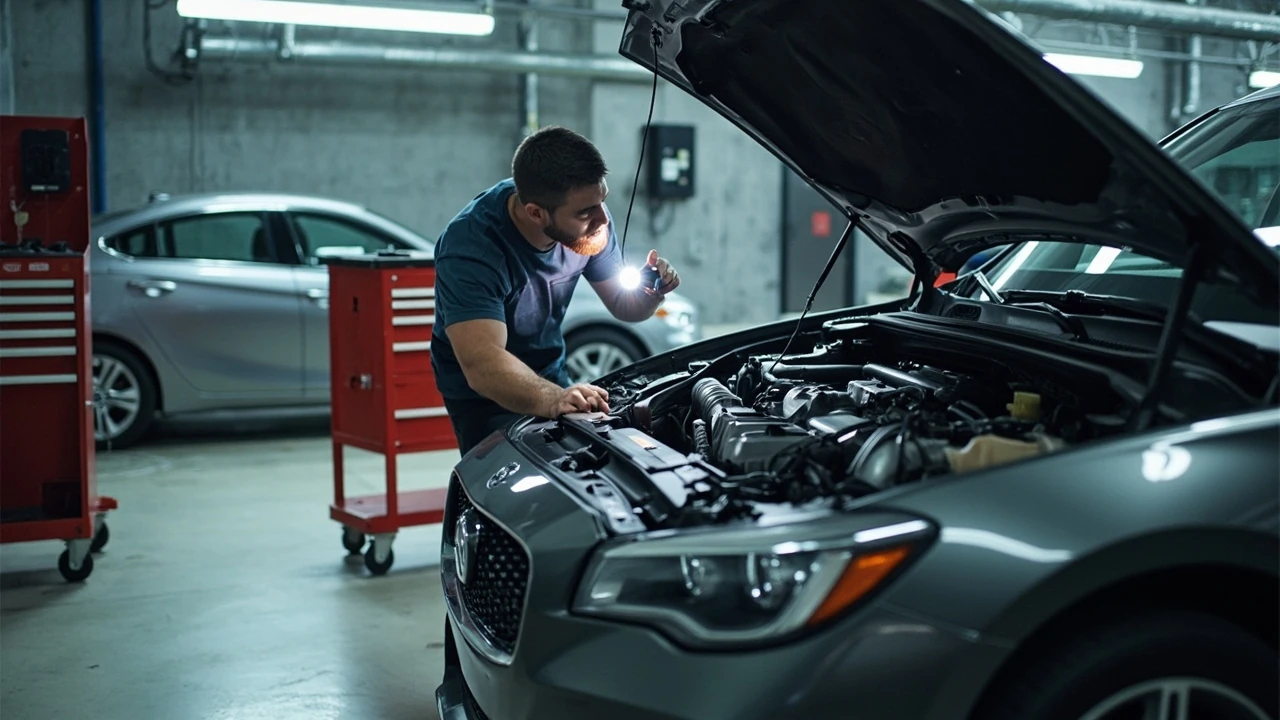

Free car inspection: what a no-cost vehicle check really covers
A driver pulls into a service bay for a routine oil change, expects to pay only for the oil and a filter, and walks out with a printed checklist of tire pressures, brake-pad thickness, and battery voltage. That single page of measurements is what most shops call a free car inspection, and for many motorists it becomes one of the more useful touchpoints with a vehicle they rarely think about between registration renewals. The catch is that the term is not regulated the way state safety inspections are, so the depth of a courtesy check can vary widely from one shop to the next, and a checklist that looks thorough at one garage may cover half as many items at another.
This guide explains what a free car inspection usually includes, what it almost never includes, how to read the results, and how to decide whether the offer is worth scheduling around. It also covers where the offer makes the most sense for a driver who already trusts a shop, where a paid formal inspection is the smarter choice, and how to ask the right questions so the printed report you take home actually helps you make decisions about the car.
What a free car inspection typically covers
The areas most often included are:
- Lights and wipers: headlight, brake light, turn signal, and wiper blade function, including a quick look at cracked lenses and streaking rubber.
- Dashboard warning indicators: any illuminated symbols that suggest a stored fault, a maintenance reminder, or a bulb-out signal.
- Tires: tread depth measured in 32nds of an inch, wear pattern across the tread face, and cold inflation pressure on each corner plus the spare if accessible.
- Battery, fluids, belts, and hoses: resting voltage at the terminals, fluid levels and condition under the hood, and visible cracking, glazing, or seepage on rubber components.
- Brake system: pad thickness visible through the caliper window, rotor surface for heavy lipping or scoring, and brake fluid level at the master cylinder.
None of those checks require special equipment beyond a tire-tread gauge, a basic digital multimeter, a brake-fluid hydrometer, and a flashlight. That is why a shop can absorb the cost inside a paid service and still profit on the labor it was already going to bill for, and why the offer shows up at quick-lube chains, independent garages, and dealerships with roughly the same shape.
What a free car inspection usually does not include
The same cost reality is what limits the inspection. Once a check requires shop time, specialty tools, or consumables, it stops being free. Drivers should expect the following items to be outside the scope of a typical courtesy check, and being clear about that boundary ahead of the visit prevents the common frustration of expecting a complete mechanical audit and receiving only a list of items that still need a paid follow-up.
| Component | Usually in a free check | Usually a paid diagnostic |
|---|---|---|
| Engine oil level and color | Yes, dipstick reading | Full used-oil analysis lab report: no |
| Tire pressure and tread depth | Yes, gauge and tread indicator | Wheel alignment readout or road-force balance: no |
| Battery resting voltage | Yes, surface-charge reading | Alternator output under load or conductance test: no |
| Dashboard warning lights | Read and noted on the report | Scan-tool fault code retrieval and freeze-frame data: depends on shop |
| Brake pad visual thickness | Yes, through the wheel | Brake system fluid flush, caliper service, or ABS bleed: no |
| Suspension components | Visual check for obvious damage | Shaker test, alignment angles, or strut bounce test: no |
| Transmission fluid | Dipstick level and color only | Pan drop, filter replacement, or full fluid exchange: no |
| Exhaust and emissions | Visual check for hangers and leaks | Tailpipe gas analysis or OBD-II readiness check: no |
A useful mental model: anything that can be seen, measured, or pumped in under a minute stays free, and anything that requires a scan tool, a road test, or a fluid exchange steps out of the courtesy lane and into a paid service ticket.
Free car inspection vs. state safety inspection vs. pre-purchase inspection
Three different inspection products share shelf space in most markets, and the labels get mixed up quickly. They serve different purposes, the results carry different legal weight, and the price tag is set by very different parties. A driver who understands the difference will not accidentally use a courtesy check where a state certificate or a pre-purchase report is required.
| Inspection type | Who pays | What it covers | What it produces |
|---|---|---|---|
| Courtesy / free car inspection | Shop absorbs the cost; bundled with a paid service | Visual and basic measurement check of common wear items | A printed or digital list of items coded green, yellow, or red |
| State safety or emissions inspection | Driver pays a fixed state-set fee, often under $50 | Specific items defined by state law, often brakes, lights, tires, glass, and emissions equipment | A pass or fail certificate required for registration in some states |
| Pre-purchase inspection | Prospective buyer pays, often $150 to $300 | Detailed mechanical, body, undercarriage, and road test of a used vehicle the buyer is considering | A report that supports price negotiation, repair requests, or a walk-away decision |
A driver with a familiar car in good working order usually wants the first row. A driver registering a car in a state that requires a periodic inspection is really shopping for the second row, and the certificate is what the DMV will accept, not a courtesy printout. A driver thinking about buying a stranger’s car needs the third row and should not let a free check stand in for it, because the seller has no obligation to address what a courtesy report turns up.
How shops build a free inspection into the visit
The economics behind a no-cost check are simple. When a vehicle is already on a lift for an oil change, tire rotation, or brake job, the technician is being paid for a defined task measured in flat-rate hours. Adding a ten to fifteen minute walkaround costs the shop almost nothing in labor, since the technician is already standing next to the car with the wheels off or the hood up, and the work creates a tangible value the customer can see at pickup. There is also a strong business reason: a careful inspection surfaces additional work the shop can quote, such as new wiper blades, a battery replacement, a coolant flush, or a set of brake pads. Done well, that follow-up work builds trust instead of resentment, because each recommendation ties to a specific reading, a measurement, or a photographed component, and the customer can decide on the spot whether the repair fits the budget and the car’s needs.
Drivers who understand this can take advantage of the model without feeling pressured. The right mindset is to treat the inspection as a free second opinion from a shop that already has the car apart, not as a substitute for scheduled maintenance or as a guarantee. The shop’s incentive is to find real work; the customer’s incentive is to verify that the work is real. When both sides are honest, the inspection pays for itself even if no additional repair is authorized.
How to prepare for a free car inspection
A short list of habits before the visit makes the inspection more useful and faster, and most of them take less than five minutes at home. The goal is to give the technician a clean baseline so the readings on the report are easy to interpret against the owner’s manual and against the next visit’s report.
- Bring any past service records, especially for tires, brakes, and the battery, so the technician can compare current readings with previous ones and flag any item that has aged faster than expected.
- Write down any concerns you have noticed: a vibration at highway speed, a slow crank on cold mornings, a pull to one side under braking, a faint sweet smell from the vents, or a clunk over speed bumps.
- Make sure the fuel tank is at least a quarter full, so the technician can check fuel system behavior and read the fuel-level sensor without flagging a low-fuel artifact as a fault.
- Leave the interior reasonably tidy so floor mats and seat rails can be lifted for a quick look at carpet moisture, seatbelt anchors, and any signs of water intrusion from a leaking windshield seal.
- Ask whether the inspection is performed before or after the paid service, because measurements taken before work begins are easier to interpret than those taken right after, especially for fluid levels and battery voltage.
None of these steps are required, but each one reduces the chance of a false flag on the report, and false flags are the most common reason drivers stop reading inspection results at all. A report that is accurate on the first visit is more likely to be trusted on the second.
How to read the inspection report
A courtesy inspection is a visual and quick-measurement check built around a service visit. The shop uses the time the car is already on the lift or in the bay to look at components that affect safety and reliability. For additional context, Pep Boys describes its PepCheck as a courtesy car inspection included with any service, and the categories they list match what most general repair shops also flag during a no-cost walkaround. The framing matters: this is a check that rides along with work you were already paying for, not a stand-alone audit.
Most shops use a three-color system, and the categories are roughly consistent across chains and independents. Drivers who know what each color means can act on the result without a follow-up phone call, and they can also spot the difference between a shop that uses the colors as a sales tool and a shop that uses them as a safety tool.
- Green: item is within factory spec or has useful life remaining. No action needed at this visit, and the line item is there mainly for the historical record.
- Yellow: item is approaching the end of its service life. Schedule a return visit, but there is no immediate safety risk, and the item can usually wait until the next planned service.
- Red: item has failed or is close enough to failure that continuing to drive creates a real risk. Address before the next long trip, and ask the shop to show the measurement that earned the red.
A single red item on a familiar car is rarely a sales pitch, and it is often the whole reason the driver agreed to the inspection in the first place. A long list of red items on a vehicle with under 60,000 miles can indicate that the previous owner skipped maintenance, and a paid second opinion from an independent shop is worth the cost before authorizing any large repair, especially if the red items are clustered in one system such as brakes or suspension.
Where a free check adds the most value
For most drivers, a no-cost inspection is most useful in three situations, and each one lines up with a moment when a fresh set of eyes on the car is worth more than the time it takes to review the report.
- Before a long road trip, when the car is already going in for a tire rotation or oil change, and a technician can catch a slow coolant leak, a weak battery, or a tire that is close to the wear bar before it becomes a roadside problem.
- After a warning light has been on for a few days, when the technician can document the reading alongside the other measurements so the owner has a baseline for a later paid diagnostic if the light returns.
- Around major service intervals, such as the 60,000 or 90,000 mile mark, when many wear items are at the end of their design life at the same time and a single report can shape the next two years of repair planning.
Outside those windows, the marginal value of a free check drops. A driver who already has a trusted mechanic and a consistent service schedule usually has nothing new to learn from a courtesy walkaround, and the better use of the visit is to stick with the paid work that brought the car in.
Where a free check is not enough
There are also moments when a free inspection is the wrong tool, and using it as a stand-in for the right tool can cost the driver more than the inspection saved. The biggest one is buying a used car. A seller who allows a free courtesy check at a shop that did not service the car is offering the buyer almost nothing: the technician is reading visible wear patterns, not pulling fault codes, and there is no guarantee the seller will agree to fix anything that turns up. A formal pre-purchase inspection, performed by an independent shop of the buyer’s choice, is the only inspection that supports a real negotiation, and the report is the document the buyer uses to ask for a price reduction or to walk away.
Other situations that call for a paid diagnostic instead of a free check include:
- An intermittent warning light that does not stay on long enough to read with a scan tool.
- A drivability issue such as a misfire, hard shift, or hesitation under load, where the cause is rarely visible from above.
- A suspected fluid leak that requires raising the vehicle, removing shields, and tracing the source with a dye or a pressure test.
- A vehicle that has sat unused for months, since corrosion, dried seals, and stale fuel often need a deeper look than a walkaround allows.
In each of these cases, the right starting point is a paid diagnostic, not a courtesy walkaround, and the printed report from a free check will not be enough to act on.
How often to use a free car inspection
There is no fixed schedule, but a practical rhythm for most drivers is to accept a courtesy check at every other oil change, or roughly twice a year, and to request a written or emailed copy of the report each time. The accumulation of two or three reports builds a small history of measurements that is far more useful than any single visit, because the trend line is what tells a driver that a battery is aging out or that a set of tires is wearing faster than expected. Tire-tread depth in spring, battery voltage in fall, and brake-pad thickness once a year will catch the slow-moving items that turn into expensive repairs when ignored, and the check itself is free, so the only cost is the few minutes it takes to read the report when the car is picked up.
Drivers with severe-service habits, such as frequent towing, dusty job sites, or short-trip commutes in cold weather where the engine rarely reaches full operating temperature, can shorten the rhythm to every oil change. The inspection itself is free, so the only real cost is the time to review the report and act on the yellow items before they turn into red ones.
Questions to ask during the walkaround
Five short questions turn a printed report into actionable information, and they also reveal a lot about how the shop treats the inspection. A shop that answers clearly is a shop that treats the courtesy check as a relationship tool rather than a sales tool, and that distinction matters more than any single measurement on the page.
- Which items on the report changed since the last visit, if the shop has the previous record on file?
- What is the measured value, not just the color, for each yellow or red item, so the driver can compare it to the owner’s manual?
- How many miles or months of useful life remain on each yellow item, and what driving conditions would shorten that estimate?
- Are any red items safety-related, or are they all wear items that can wait a few weeks until the budget allows?
- Can I get a written or emailed copy of the report before authorizing any additional work, and is the report stored in the shop’s system for the next visit?
Asking the questions out loud also creates a small paper trail. If the shop recommends a repair that the driver declines, the next visit’s report will show whether the item moved from yellow to red, and that comparison is the most honest answer to whether the original recommendation was sound.
How to compare free offers between shops
Drivers with more than one local option should compare on substance, not on the word “free,” because two shops in the same town can advertise a free car inspection and deliver very different levels of detail. The table below is a starting point for that comparison, and the same five questions can be asked of each shop before the first visit.
| Comparison point | What to look for | Why it matters |
|---|---|---|
| Scope | Specific list of items included, in writing | A vague offer may be only a tire and wiper check. |
| Format | Printed or digital report with measured values | A verbal summary is hard to compare between visits. |
| Timing | Performed before the paid service, not after | Pre-service readings are easier to act on. |
| Upsell pressure | Recommendations tied to specific measurements | Tied recommendations are easier to evaluate. |
| Follow-up | Report emailed or texted for the customer’s records | A copy supports a second opinion if needed. |
Two shops can both advertise a free car inspection and offer very different levels of detail. A driver who has the report in hand, in a format that can be compared to the next visit, is in a stronger position to judge the value of the visit and to switch shops if the quality drops.
Frequently asked questions
Is a free car inspection actually free?
It is free in the sense that you are not charged a separate fee for the inspection. The cost is built into a paid service such as an oil change, tire rotation, or brake job, and the shop absorbs the few minutes of technician time as part of that work. If you want only the inspection with no service, most shops will quote a diagnostic fee instead, because the labor is no longer riding along with a paid job.
How long does a free car inspection take?
A typical courtesy check takes ten to twenty minutes, depending on how many items the shop includes and whether the vehicle is already on a lift for the paid service. The inspection is usually added to the normal service time rather than requiring a separate visit, so the pickup time rarely shifts because of the check itself.
Can I get a free car inspection without getting other work done?
Most shops will not perform a free inspection as a standalone service, because the labor is not absorbed by another paid job. A few dealerships and quick-lube chains offer a no-service-needed courtesy check as a goodwill gesture, especially for regular customers, but those offers are usually limited to tire pressure, fluid top-offs, and a visual look under the hood.
Do dealerships offer a free car inspection?
Many dealerships include a courtesy check with any service, especially during a manufacturer’s maintenance interval or a recall visit. The depth varies by brand and by region, so it is worth asking for the specific list of items before scheduling, and worth asking whether the report is kept in the dealer’s system for the next visit.
Is a free car inspection the same as a state safety inspection?
No. A state safety or emissions inspection is a regulated test with pass or fail criteria set by the state, and the certificate is often required for registration renewal. A free car inspection is an unregulated courtesy check, and the report cannot be used in place of a state certificate at the DMV or a state inspection station.
What should I do with the inspection report?
Keep a copy in the glove box or saved on your phone, and compare it with the next report. Yellow and red items are easier to prioritize when you can see whether a measurement is moving over time, and a short history of reports is often more useful than any single reading on a single visit.
Can a free inspection find a serious problem?
Yes, but only if the problem is visible without disassembly. Low tire tread, a slow fluid leak, a cracked belt, a weak battery, worn wiper blades, and thin brake pads are all in scope for a courtesy check. Internal engine or transmission issues, hidden exhaust leaks, and intermittent electrical faults typically need a paid diagnostic with a scan tool and a road test.
Is a free car inspection worth it before a road trip?
For a short regional trip, the regular pre-trip walkaround at home is usually enough. For a long highway drive, accepting a free check at a scheduled service visit is a low-cost way to catch a weak battery, a bald tire, or a slow leak before it becomes a roadside problem in an unfamiliar town.
Will a free inspection void my warranty?
No. A visual and basic measurement check does not alter any warranty-covered component, and the report itself is just a record of observations. Keep the report with your service records in case a later warranty claim requires evidence of routine maintenance and inspections.
How do I know if I can trust the inspection results?
Look for measured values rather than vague recommendations, ask for a written report, and compare the report to the next one. A shop that documents specific numbers, explains them in plain language, and stores the report for future visits is a shop that takes the inspection seriously, and that is the kind of shop where a free car inspection is worth the time it takes to review the results.