
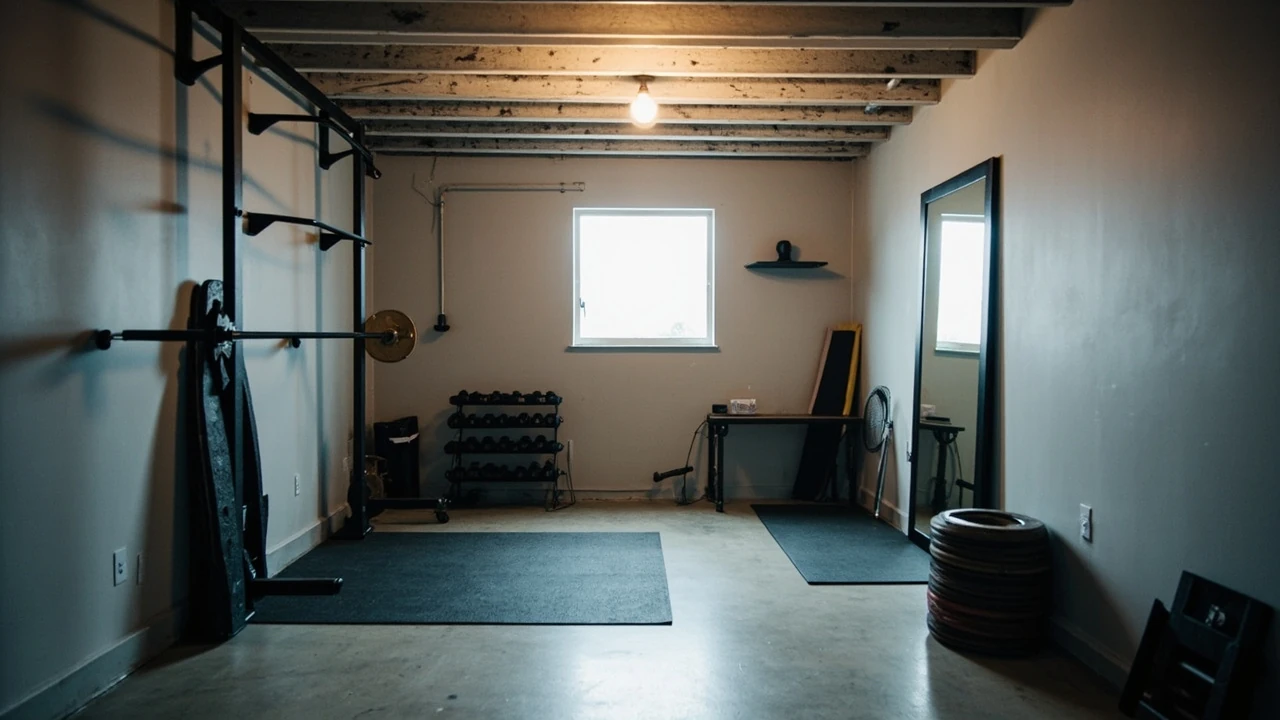

Home gym ideas that fit the rooms you already have
You measure a spare corner with a tape, glance at the treadmill collecting laundry in the garage, and wonder whether a real workout space is even possible without a renovation loan. Most American homes are not designed around fitness, so the best plans start with the room you can spare, not the equipment you saw in a glossy ad.
The strongest home gym ideas tend to grow from three constraints at once: the square footage you can give up, the training style you will actually stick to, and a budget that survives a real paycheck. Once those are honest, the layout, flooring, lighting, and gear fall into place much faster than a Pinterest board full of black rubber floors and neon signs would suggest.
This guide walks through the decisions that matter before you buy anything: how to size a room, how to plan around structural limits like ceiling height and floor joists, which flooring protects both your body and the house, and how to choose equipment that earns its footprint. Along the way you will find layout sketches in table form, an equipment checklist you can print, and answers to the questions homeowners ask most often before turning a bedroom, garage, or basement into a workout space.
Start with the room, not the equipment
The biggest mistake people make is choosing equipment first and looking for space afterward. A better order is to choose the room, measure it carefully, then ask what can actually fit without turning the space into a hazard.
For most homes, the realistic candidates are:
- A spare bedroom that rarely gets used
- A garage, either shared with a car or fully converted
- A basement, finished or unfinished
- A finished attic with adequate ceiling height
- A small corner of a living room or office
- An outdoor shed or detached structure with power
Each option has its own limits, and those limits shape the kind of training the room can support. A corner of the living room might be perfect for yoga, mobility, and a pair of dumbbells, but it is a poor place for heavy barbell training. A garage can host a full rack and platform, but it usually fights heat, cold, and moisture unless it is conditioned.
Designers writing for outlets like Good Housekeeping have long noted that even modest rooms can host a serious workout when the layout is honest about what the space can hold, rather than chasing a magazine image of a black-walled studio with mirrored walls.
Measure before you plan the layout
Two numbers decide almost everything: floor area and ceiling height. Trainers and equipment makers use them as a starting point because they tell you which movements are physically possible.
For most strength workouts, you need a clear floor rectangle roughly 8 by 8 feet for body weight and dumbbell work, 10 by 10 feet for a rack with a barbell on the inside, and 10 by 12 feet or more if you want a platform plus a cable machine. Ceiling height becomes a hard limit the moment you start pressing a barbell overhead or doing pull-ups; about 8 feet is workable, 9 feet is comfortable, and anything under 7 feet 6 inches will clip the ceiling on a press or a kip.
| Training style | Minimum floor space | Minimum ceiling height | Notes |
|---|---|---|---|
| Bodyweight, yoga, mobility | 6 by 6 ft | 7 ft 6 in | Works in a living room corner or office |
| Dumbbells and bench | 8 by 8 ft | 7 ft 6 in | Add a mirror for form checks |
| Power rack with barbell | 10 by 10 ft | 8 ft | Platform optional, helpful for deadlifts |
| Functional trainer and rack | 10 by 12 ft | 8 ft | Allow 3 ft behind the cable arms |
| Treadmill or bike zone | 7 by 7 ft per machine | 7 ft 6 in | Add clearance behind the console |
| Garage full conversion | One-car bay, 10 by 20 ft | Garage door height | Mind garage door tracks and opener rails |
When you measure, leave at least 2 feet of clear space behind a bench and 3 feet behind a cable machine so the load stays on the platform, not on the drywall. Write the numbers down. They will save you from returning a treadmill that does not fit through the door or a rack that blocks the only window.
Map the room on paper before you buy
A quick sketch prevents the most common layout mistakes, which are usually about swing path and sight lines rather than raw size. Tape the floor into a 1-foot grid if you can, and walk through the movements you plan to do. The point is to feel the room before it is full of steel.
Key things to mark on the sketch:
- Door swing, both interior doors and any garage door
- Windows, vents, and the path of HVAC ducts
- Electrical outlets and the panel capacity
- Load-bearing walls if you plan to mount a pull-up bar or hang a heavy bag
- Floor joist direction, which matters for heavy equipment like a squat rack or a piano-sized safe
For a small bedroom conversion, a common working layout is a rack along the long wall with the bench inside the rack, a mirror on the opposite wall, and a TV or speaker mounted in a corner that is never in the path of a falling barbell. The same idea works in a finished basement, where the rack usually goes against a concrete wall for stability and a platform protects the rest of the floor.
Pick a flooring system that protects the house
Flooring is the most underrated decision in any home gym. It absorbs dropped weights, dampens sound, keeps the subfloor from being gouged, and quietly decides whether the room is comfortable in bare feet or a pair of lifting shoes.
The options fall into four broad families, and each behaves differently over wood, concrete, and existing carpet.
| Surface | Best for | Thickness | Cost per sq ft (typical range) | Notes |
|---|---|---|---|---|
| Interlocking rubber tiles | Garages, basements, rack zones | 8 mm to 1 inch | $2 to $6 | Easy to install, replaceable if a tile gets torn |
| Rolled rubber | Larger rooms, commercial-style look | 6 mm to 3/8 inch | $2 to $5 | Fewer seams, heavier to handle |
| Horse stall mats | Budget builds, deadlift platforms | 3/4 inch | $1.50 to $3 | Heavy, strong rubber smell at first, sometimes over 4 by 6 ft |
| Foam tiles or puzzle mats | Yoga, kids, light dumbbells | 12 mm to 1 inch | $1 to $4 | Not suitable under heavy barbell drops |
For most homeowners, a layer of 3/4-inch rubber over the existing subfloor, with a sealed plywood or horse-stall platform under the rack, handles 95 percent of training. The platform keeps the floor from cupping after thousands of deadlifts, and the surrounding rubber cuts noise for the room below. If the gym will be a yoga and mobility space, foam tile is friendlier to knees and bare feet, but it is not the right material under a loaded barbell.
Manage climate before you commit to a room
A room you cannot keep at a reasonable temperature is a room you will quietly stop using. Garages and basements are the usual climate headaches.
In a garage, heat is the bigger problem for most U.S. climates. A mini-split heat pump or a window unit at the back of the room lets you train in summer without the garage feeling like an oven. Cold winters in an uninsulated garage are easier on equipment than on the person using it, so a small electric heater or radiant panel is a worthwhile add. If you plan to keep a car in the same bay, the equipment needs to live along one wall and the car needs a clear path to the door.
In a basement, moisture is the bigger concern. A dehumidifier set to keep relative humidity below about 55 percent protects both the equipment and any drywall or framing in the room. A basic hygrometer costs very little and tells you whether you have a real problem or just a perception. Finished basements also need adequate ventilation, since sweat and rubber flooring can leave a room feeling closed in within a few workouts.
Build the room around a few movements, not a wish list
Most people buy more equipment than they use. The reverse approach is to list the movements you actually want to do, then choose the minimum equipment that supports them.
For a general strength and conditioning setup, the list usually includes a squat, a hinge, a press, a pull, a carry, and some form of cardio. The equipment below covers that list without overfilling a small room.
- Power rack or half rack with safety pins and a pull-up bar
- Adjustable bench, flat to incline
- Olympic barbell and plates totaling around 300 lb to start
- Adjustable dumbbells or a small fixed set from 5 to 50 lb
- A mat for stretching, push-ups, and core work
- A kettlebell or two for swings and carries
- Resistance bands for warm-ups and accessory work
- A jump rope or compact bike for warm-ups and low-impact cardio
If your training leans toward running, the room shifts: a treadmill or a smart bike replaces the rack, and the floor choice moves from heavy rubber to something that absorbs impact without feeling industrial. If your training leans toward mobility, the room becomes a mat, a foam roller, a set of light dumbbells, and a wall-mounted mirror so you can actually see your posture.
Plan electrical, lighting, and sound early
Few things make a home gym feel disposable like bad lighting and one wall outlet. The fix is simple, but it is much easier before the rubber floor goes down.
Aim for around 50 foot-candles at floor level across the training area, which is bright enough to read a tablet and check form without harsh glare. A combination of overhead LED panels and a couple of directional lights over the rack works well. In a basement, paint ceilings white or a light neutral to bounce light around, since basements eat brightness.
Electrical needs are modest. One 20-amp circuit covers a treadmill or a bike plus a TV, and another circuit handles lights, a fan, and chargers. If you plan to run a treadmill and a space heater at the same time, put them on different circuits. Most people discover this the hard way when the breaker trips mid-workout.
Sound is not a luxury. A small Bluetooth speaker or a soundbar with a TV keeps a workout honest, especially on days when motivation is low. If the room shares a wall with a bedroom, plan for some acoustic treatment, even if it is just a rug under the equipment and a bookshelf on the shared wall.
Storage, mirrors, and the small details that matter
Once the big items are in place, the room often still feels unfinished. The difference usually comes down to three small systems: a place for everything, a way to see yourself, and a way to control the climate of the room.
Wall storage is the highest-value add for small rooms. A simple French cleat with hooks holds bands, belts, and ropes, and a low shelf along the back wall holds shoes, a foam roller, and a water bottle. The goal is that everything has a home, because equipment without a home tends to migrate back to the garage floor.
Mirrors do more than decorate. A 6-foot mirror on the wall opposite the rack lets you check squat depth, bench path, and shoulder position without a spotter. If the room is shared, consider a mirror that is mounted but not glued, so it can be removed later without drywall repair.
Fans and ventilation often get ignored until July. A ceiling fan on a low setting, a wall-mounted oscillating fan, or a small ducted vent tied into the home HVAC can keep the room usable in warm months. A single thermometer on the wall is a useful reminder that the room is working as intended.
Common home gym ideas for specific rooms
The best home gym ideas are the ones that respect the room you have. The list below pairs a real room with a layout that has worked well for many homeowners, with notes on what to keep in mind.
| Room | Strong layout | Best equipment focus | Watch out for |
|---|---|---|---|
| Spare bedroom | Rack on long wall, bench inside rack, mirror opposite | Rack, barbell, adjustable bench, dumbbells | Floor load, noise for adjacent rooms |
| Garage (shared) | Equipment along one wall, car path clear | Half rack, fold-up bench, wall storage | Heat, cold, moisture, door swing |
| Garage (full conversion) | Platform in center, rack on back wall, TV opposite | Full rack, platform, dumbbells, cardio | Insulation, garage door clearance |
| Unfinished basement | Rack against concrete wall, rubber floor over concrete | Rack, platform, cardio, cable machine | Moisture, ceiling height, lighting |
| Finished basement | Cardio facing TV, rack on side wall, mat zone in corner | Mix of rack and cardio, mat for mobility | Ventilation, sound to upper floor |
| Living room corner | Mirror on one wall, mat, small rack or dumbbells | Dumbbells, mat, bands, fold-up bench | Aesthetics, foot traffic around the zone |
| Low-impact and strength, no heavy barbell | Dumbbells, bands, bike, mat | Ceiling height, floor joist capacity, heat | |
| Outdoor shed | Mirror, mat, simple rack, weatherproof flooring | Bodyweight, dumbbells, bands, jump rope | Moisture, security, permits, power |
For a garage that is fully converted, homeowners often build a 4 by 8 foot platform in the center, place the rack along the back wall, and add a TV and a fan. The platform is heavy, but it protects the slab and keeps the room quiet for the rest of the house. For a small bedroom, the same idea in a smaller form, with a half rack and a folding bench, often leaves enough floor space to keep the room feeling like a room.
Budget the build like a project, not a wish list
A realistic budget is the difference between a finished room and a half-finished one. Most homeowners do not need to spend a lot to get a useful space, but the order of spending matters. A common ordering goes something like the list below, starting with the items that cannot be changed later.
- Floor protection: rubber and a platform
- Electrical and lighting upgrades
- Climate control: a fan, a heater, or a small AC unit
- Storage: wall hooks, a small shelf, a mirror
- Rack, barbell, and bench, the structural pieces
- Free weights and accessories
- Cardio equipment, if budget allows
- Finishing touches: paint, decor, sound
A starter room with a half rack, a barbell, a bench, a small set of dumbbells, rubber flooring, and a mirror can be assembled for far less than a single new treadmill. As the training habit sticks, the room grows with the user, which is part of why the home gym has become a default plan for many U.S. households.
Safety and the small mistakes that cause big injuries
Most home gym injuries are not dramatic. They are the result of a plate sliding off a stack, a barbell rolling off a bench, or a cable snapping because it was worn through. The list below covers the checks worth making before the first workout.
- Bolt the rack to the floor or use a heavy platform to keep it from tipping
- Set safety pins at the right height so a missed lift is caught, not crashed
- Inspect cables, straps, and ropes for fraying every few months
- Keep the floor clear of plates, bands, and water bottles between sessions
- Use collars on the barbell so plates do not slide during a press or a squat
- Place a fan or open a window so the room does not overheat during long sessions
For heavier builds, a structural check is worth the cost of a quick visit from a contractor or an engineer. A standard residential floor can usually hold a rack and a few hundred pounds of plates, but a second-floor setup with a heavy platform deserves a second opinion.
Make the room feel like a place you want to be
Equipment gets you in the door. Atmosphere keeps you coming back. The room should reflect something about the person training in it, because a sterile black box is easy to avoid.
Simple choices make a real difference. A wall color you actually like, a print or a quote that means something, a plant that survives low light, a sound system that fits the room, and a small bench or chair where you can sit between sets. None of these are expensive, and they quietly turn a spare room into a space that feels worth the trip downstairs.
Designers writing for home and lifestyle publications have made the same point from a different angle: a home gym that looks like a place you want to spend time will see more use than a room that looks like a warehouse, even when the equipment is identical. The room that fits your routine and your taste is the one that survives a long winter and a busy week.
Frequently asked questions
What is the cheapest way to build a home gym?
The most affordable builds start with bodyweight training and a single set of adjustable dumbbells over interlocking rubber tiles. As you add a bench, a barbell, and a basic rack, the room grows into a full strength setup without ever buying a cardio machine you will not use.
How much space do I need for a home gym?
For most people, an area of about 10 by 10 feet with a 7 to 8 foot ceiling is enough to host a power rack, a barbell, a bench, and a small dumbbell set. Smaller spaces can still work for bodyweight training, mobility, and a pair of dumbbells, but heavy barbell work needs more height and floor area to be safe.
Can I put a home gym in a second-floor bedroom?
Yes, but check the floor structure first. A standard residential floor usually handles a rack and a few hundred pounds of weights, but a heavy platform or a loaded safe can push past what a second-story joist was designed to carry. A short consultation with a contractor or engineer is a reasonable cost for that peace of mind.
What is the best flooring for a home gym?
Interlocking rubber tiles or rolled rubber over the subfloor, paired with a 3/4-inch plywood or horse-stall platform under a rack, is the most common and forgiving choice. Foam tile is fine for yoga and mobility, but it is not strong enough under a dropped barbell.
How do I control temperature in a garage gym?
A mini-split heat pump is the most efficient option for year-round comfort, and a window unit with a small electric heater handles most climates. A ceiling fan or an oscillating floor fan is a low-cost add that makes summer workouts far more comfortable.
Do I need a mirror in a home gym?
A mirror is not required, but it makes a real difference for form checks on squats, presses, and rows. A single 6-foot mirror on the wall opposite the rack is usually enough, and it doubles as a way to make a small room feel larger.
What equipment should I buy first?
A barbell, a rack with safety pins, a flat-to-incline bench, and a set of adjustable dumbbells will cover the majority of strength training. Cardio equipment and a cable machine are useful upgrades once the basic strength setup is in regular use.
How do I keep a basement gym from feeling damp?
Run a dehumidifier set to keep relative humidity below about 55 percent, and use a hygrometer to confirm the room is actually dry. Good ventilation and a small fan also help, since sweat and rubber flooring add humidity during long sessions.
Are home gym ideas different for small apartments?
Yes. In an apartment, bodyweight training, a fold-up bench, a pair of adjustable dumbbells, and resistance bands usually do more per square foot than a full rack. A quiet mat zone in a living room corner, with a mirror and a wall-mounted TV, often gets more consistent use than a converted closet.
How long does it take to set up a basic home gym?
A spare bedroom with rubber tile, a half rack, a barbell, a bench, and a few sets of dumbbells can be ready in a single weekend if the room is empty and the electrical is already in place. A garage or basement build with flooring, climate control, and lighting usually runs a few weekends, especially if you are painting or adding a platform.