
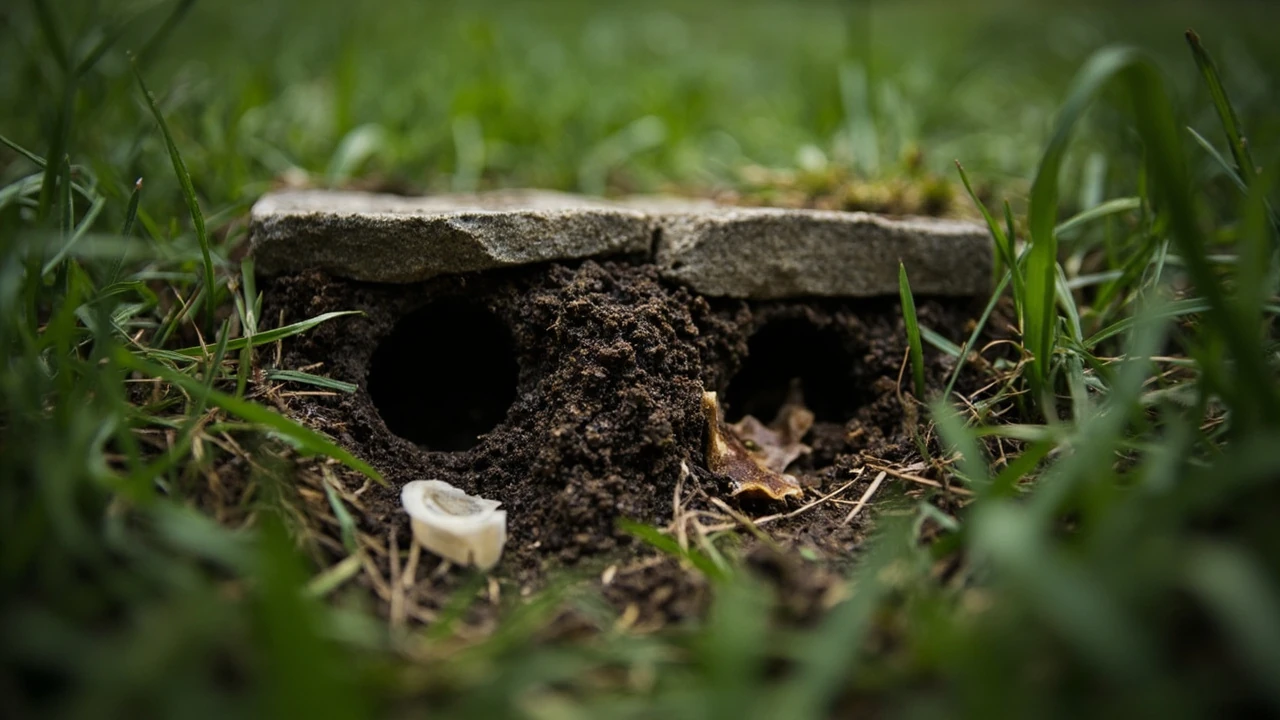

Chipmunk holes vs snake holes: a field guide to telling them apart
You walk out to the lawn, coffee in hand, and notice a new opening at the edge of the garden bed. It is about the size of a quarter, the soil around it looks fresh, and there is a faint trail of tiny footprints in the soft dirt. The question most homeowners ask in that moment is simple: did a chipmunk dig this, or is something with scales living under the porch? Understanding the difference between chipmunk holes vs snake holes is the first step toward choosing the right response, because the two animals leave very different evidence behind.
Chipmunks are active diggers that excavate their own burrow systems. Snakes rarely do that work themselves. Most snake species use openings that other animals abandoned, or they squeeze into existing cracks, gaps under flat stones, or the leftover tunnels of rodents. That behavioral difference is the foundation for almost every physical clue you can use to identify the hole in front of you. Size, shape, soil disturbance, debris, tracks, and shed skin all point back to who actually lives there.
Why the two animals leave such different evidence
Chipmunks are small ground squirrels with strong front paws built for digging. They construct multi-chamber burrows that include a nesting room, food storage areas, and escape tunnels. Because they do the digging themselves, the area around a chipmunk burrow entrance usually shows fresh work: a small mound of loose soil, claw marks in the dirt, and a circular opening that the animal can plug with its tail when threatened.
Snakes are built differently. A snake’s body is long and muscular, but it does not have the limbs or claws needed to excavate soil efficiently. Most snakes prefer to occupy holes, rock piles, log stacks, or gaps under foundations that another animal already opened. That is why a snake “hole” is often just an existing opening that has been slightly enlarged or simply used as-is. The surrounding soil may look undisturbed because no one recently dug there.
Recognizing this behavioral split helps you avoid the common mistake of blaming a snake for every burrow-shaped depression in the yard. Many homeowners fill what they assume is a snake den, only to discover that the actual resident is a chipmunk family that is now exposed to predators and weather.
How to inspect a hole in your yard
Before you fill, fence, or treat any opening, take a few minutes to look at the evidence. A careful inspection is safer for you and more effective for whatever animal is actually present. The following steps give you a structured way to evaluate a single opening without putting yourself at risk.
- Stand a few feet back and observe the area for five to ten minutes. A live animal will often appear, especially in the early morning or late afternoon.
- Measure the opening with a ruler or estimate against a coin. Diameter is one of the fastest clues for separating the two species.
- Look at the soil around the entrance. Fresh, powdery soil points to active digging. Untouched soil suggests a reused or natural opening.
- Check for tracks, claw marks, tail drags, shed skin, or droppings. Each of these narrows the field quickly.
- Check the location of the opening. Chipmunks often choose open lawn edges, garden borders, or foundation lines. Snakes favor cool, shaded cover such as woodpiles, rock walls, and porch skirts.
Wear gloves during the inspection, especially if you suspect a snake. Even non-venomous species can bite, and you cannot reliably identify a venomous snake by hole shape alone. If you are in a region with rattlesnakes or copperheads, treat every opening with caution and contact a wildlife professional if the signs are unclear.
Size and shape of the opening
Size is usually the first clue people notice, and it is a useful one. A typical chipmunk burrow entrance is about two to three inches across, roughly the size of a silver dollar. The opening is usually round and the edges look clean, because chipmunks can pack dirt tightly as they dig and they can quickly plug the entrance with their tail when a predator approaches.
Snake openings vary much more. Diameter can range from about half an inch for a small snake to three inches or more for a larger species such as a rat snake or a rattlesnake. The shape may be circular or oval, and the edges are often irregular, because the opening was either left by a previous occupant or widened by the snake squeezing in and out over time. Some snake holes look more like cracks or slots than neat circles.
| Feature | Chipmunk hole | Snake hole |
|---|---|---|
| Typical diameter | 2 to 3 inches | 0.5 to 3 inches, varies by species |
| Shape | Round, clean edges | Round, oval, or irregular slot |
| Edges | Smooth from active digging | Worn, may show scuffing from scales |
| Depth of the tunnel | Multi-chamber system, often several feet | Often shallow, may lead to a wider cavity |
Soil, debris, and the area around the entrance
The soil pattern around the hole is one of the most reliable clues. A chipmunk excavates with both front paws and pushes dirt out behind its body as it backs up the tunnel. This often leaves a small fan-shaped mound of loose, powdery soil in front of or beside the opening. The dirt may contain bits of leaves, twigs, small stones, or food debris such as seed husks and acorn shells. Chipmunks also line their nests with soft material, so you may find shredded fabric, paper, or grass stems near the entrance.
Snake holes usually do not have a fresh soil mound, because the snake did not dig them. The area often looks the same as the rest of the lawn or garden. Any debris near the opening is more likely to be the leftovers of a previous occupant or simply natural leaf litter. If you do see fresh soil near a snake-sized opening, it usually came from a rodent that lived there earlier, not from the snake itself.
| Ground-level sign | What it usually means |
|---|---|
| Small mound of loose, powdery soil at the entrance | Most often a chipmunk or other digging rodent |
| Scattered seed husks, nut shells, or grass clippings near the hole | Strong chipmunk indicator |
| Shredded paper, fabric, or string near the opening | Rodent nesting material, likely chipmunk |
| No fresh soil, opening sits in undisturbed ground | More consistent with a reused snake entry point |
| Opening under a flat rock, log, or porch skirt | Snakes prefer shaded cover; chipmunks also use these, so check other signs |
Tracks, claw marks, and shed skin
Footprints are another strong clue when the soil is soft enough to take an impression. Chipmunk tracks are small, with four toes on the front feet and five on the back. The prints are usually about one to two inches long and often show fine claw tips. You may also see paired lines from a bounding gait and a faint tail drag in dust or fine soil. A chipmunk traveling back and forth along the same path will create a clear, narrow trail of small prints.
Snakes do not leave footprints, but they leave other signs. Freshly shed skin is the most obvious. Shed snakeskin is thin, dry, and translucent, and you may find it near the opening, caught on a nearby branch, or bunched up just inside the hole. For additional context, Snake droppings are also distinctive: they are dark, tubular, and often marked with streaks or caps of white chalky uric acid. In soft soil, you may see faint parallel lines from the large belly scales dragging along the surface, sometimes with a subtle central groove from the backbone.
- Chipmunk indicators: small paw prints with claws, paired bounding marks, a soft tail drag, and seed husks along the path.
- Snake indicators: shed skin, dark tubular droppings with white streaks, faint belly scale trails, and no paw prints.
- Ambiguous cases: openings in heavy mulch, gravel, or under dense vegetation where prints do not register well. In these cases, the absence of fresh soil and the presence of shed skin usually decide the question.
Where the hole is located
Location helps a lot when you compare chipmunk holes vs snake holes. Chipmunks prefer to dig in open or semi-open ground with good drainage. You will often find their burrow entrances along lawn edges, garden borders, under shrubs, beside retaining walls, or near the base of a deck. They like a clear sightline so they can watch for predators, and they like soil that is easy to dig.
Snakes look for cover first and warmth second. Their entry points are often under flat stones, in gaps between rocks, at the base of woodpiles, inside stacked firewood, under porch skirts, or in the gaps around foundations. In dry climates, snakes may also use cracks in soil or abandoned rodent tunnels. In cooler regions, several snakes may share a hibernation den called a hibernaculum, often on a south-facing slope that warms early in spring. Rattlesnake dens in particular can persist for decades and are reused by multiple generations.
Time of day and seasonal behavior
When you see activity can also help. Chipmunks are diurnal, meaning they are active during the day, especially in the morning and late afternoon. If you see a small striped animal darting into the opening, the question is settled. Snakes are generally more secretive. Many species are crepuscular, active at dawn and dusk, and some are nocturnal in hot weather. You are more likely to see a snake basking on a warm rock near the opening than disappearing into it during the heat of the day.
Season matters too. In cold regions, snakes often den communally in winter and emerge in spring, which is when homeowners most often notice their entry points. Chipmunks stay in their burrows through winter but do not hibernate as deeply as snakes, and you may still see tracks in snow on mild days.
Safety first when dealing with unidentified holes
Never reach into an unidentified hole. A surprising number of snake bites happen when people try to clear debris, move a rock, or pick up a tool from a place where a snake is sheltering. Even a small, non-venomous snake will defend itself if it feels trapped. Use the clues above to make a confident identification before you do any work, and keep children and pets away from the area until you are sure what is there.
- Wear closed-toe shoes and leather gloves if you must work near the opening.
- Use a flashlight to look at the hole from a safe distance rather than putting your hand inside.
- Do not try to flood the hole, because this can push a snake out toward you or drive it into a wall void.
- If the opening is large, fresh, and you live in rattlesnake or copperhead country, contact a licensed wildlife removal service.
For readers who also handle outdoor maintenance around the home, the same care-first mindset applies to other service calls. If you are arranging a free car inspection for your vehicle or scheduling oil change and tire rotation work, the principle is the same: identify the problem with a clear checklist before you commit to a fix.
How to respond once you know what is there
The right response depends on the animal. Chipmunks are not dangerous, but they can undermine retaining walls, dig up bulbs, and occasionally enter basements. A combination of exclusion and population control is usually enough.
- Install hardware cloth or L-shaped wire mesh around garden beds, bulb areas, and the base of decks. Bury the mesh at least six inches deep and bend it outward to discourage digging under it.
- Remove attractants such as open bird seed, fallen fruit, and accessible pet food.
- Use live traps baited with peanut butter or sunflower seeds, and relocate the animals at least several miles away if local rules allow it.
- Seal gaps in foundations, around utility penetrations, and around dryer vents with materials chipmunks cannot gnaw through, such as metal flashing or steel wool mixed with caulk.
Snake control is more about removing habitat than removing snakes. Filling a single opening rarely solves the problem if the surrounding area is still attractive to snakes, because new snakes will simply use the next gap they find.
- Clear woodpiles, rock piles, and dense ground cover away from the house. Store firewood on a raised rack with airflow underneath.
- Close gaps under porches, decks, and sheds with hardware cloth, leaving ventilation in place.
- Keep grass short around the foundation, and remove tall weeds that hide snake movement.
- Seal entry points at ground level with expanding foam combined with wire mesh, because snakes can fit through surprisingly small gaps.
When to call a professional
Some situations are not DIY-friendly. A wildlife professional is worth the cost in any of the following cases.
- You see a venomous snake such as a rattlesnake, copperhead, cottonmouth, or coral snake near the hole.
- The opening is part of a large hibernation den that has been used for several winters.
- A snake has gotten into the house through a wall void, basement, or HVAC system.
- Chipmunk or snake activity is causing structural damage, electrical risk, or persistent entry into living spaces.
- You live in an area with strict local wildlife rules that govern trapping, relocation, or snake handling.
Licensed wildlife control operators carry the right protective equipment, understand local species, and can relocate animals legally. For large-scale exclusion work, the same principle of working with a qualified specialist applies to other parts of home maintenance, from foundation repair decisions to water heater replacement planning.
Common mistakes homeowners make
A few recurring errors can turn a small problem into a bigger one. Avoiding them will save time and reduce risk.
- Filling a hole without checking what is inside. You may trap an animal, push a snake into a wall void, or simply create a new opening nearby.
- Assuming every circular hole is a snake den. In most yards, chipmunks and other rodents outnumber snakes, and their burrows are far more common.
- Using poison in the burrow. This is illegal in many places, dangerous to pets and wildlife, and rarely effective because a poisoned animal often dies inside the wall or burrow and causes odor problems.
- Stacking firewood or building rock piles against the house. These create perfect snake habitat right next to the foundation.
- Ignoring gnaw marks on wood, plastic, or wiring near the opening. These suggest rodents and a possible fire or electrical risk.
A quick comparison checklist
When you are standing in the yard trying to decide, run through this short comparison in your head. It captures the main differences between chipmunk holes vs snake holes in a form you can use on the spot.
- Diameter: chipmunk, about the size of a silver dollar. Snake, anywhere from a pencil width to a few inches, often irregular.
- Soil: chipmunk, fresh loose mound. Snake, undisturbed ground.
- Debris: chipmunk, seed husks, nesting material. Snake, possibly shed skin and droppings.
- Tracks: chipmunk, small paw prints and tail drag. Snake, belly scale lines, no paws.
- Location: chipmunk, open edges and garden borders. Snake, shaded cover near rocks, wood, or foundations.
Putting it all together
The question of chipmunk holes vs snake holes is really a question of behavior. Chipmunks dig, so they leave evidence of digging: clean round openings, fresh soil, and food debris. Snakes rarely dig, so the absence of fresh soil, the presence of shed skin, and the reuse of an existing gap are the strongest signals. Treat every opening with respect, look for the signs described above, and match your response to the animal you actually have rather than the one you assume is there. With a careful inspection and the right exclusion work, you can keep both your lawn and the wider neighborhood ecosystem in good shape.
Frequently asked questions
How big is a typical chipmunk hole?
A chipmunk burrow entrance is usually about two to three inches across, roughly the size of a silver dollar. The opening is round and the edges are clean, because chipmunks dig actively and can pack soil tightly as they work.
How big is a typical snake hole?
Snake openings vary by species. They can be as small as half an inch for a slender garter snake or as wide as three inches or more for a larger rat snake or rattlesnake. The shape is often oval or irregular rather than a perfect circle.
Do snakes actually dig holes?
Most snakes do not dig their own burrows. They rely on abandoned rodent tunnels, gaps under rocks and logs, cracks in soil, and spaces under foundations. There are a few exceptions, such as certain desert species, but for typical U.S. yards, a snake hole is almost always a reused opening.
What does a chipmunk hole look like in the ground?
It looks like a small round entrance about the size of a silver dollar, often with a low mound of loose powdery soil nearby, scattered seed husks, and small paw prints or a tail drag in soft dirt. You may also see shredded nesting material close to the opening.
What does a snake hole look like in the ground?
It often looks like an irregular opening tucked under a rock, log, or porch skirt, with no fresh soil around it. The surrounding ground looks the same as the rest of the lawn, and you may find shed snakeskin or dark tubular droppings with white streaks nearby.
Can a snake use a chipmunk burrow?
Yes. Snakes regularly take over abandoned chipmunk burrows and other rodent tunnels. This is one reason why a single hole in the yard can seem to host different animals in different years, and why it helps to look for current signs of activity before filling it.
How can I tell if the hole is active?
Look for fresh soil, recent tracks, fresh droppings, and the presence of food debris. You can also place a light dusting of flour or fine dirt over the entrance and check the next morning for footprints or a drag mark crossing it.
Is it safe to fill a hole in my yard?
Only after you are sure no animal is inside. Filling an occupied burrow can trap a chipmunk or force a snake to find a new entry point, often into the house. Identify the resident first, exclude it if needed, and only then fill and compact the opening.
When should I call a wildlife professional?
Call a professional if you see a venomous snake, suspect a communal hibernation den, have a snake inside the house, or face a chipmunk infestation that is causing structural damage. A licensed operator can identify the species, exclude the animals legally, and advise on long-term prevention.