
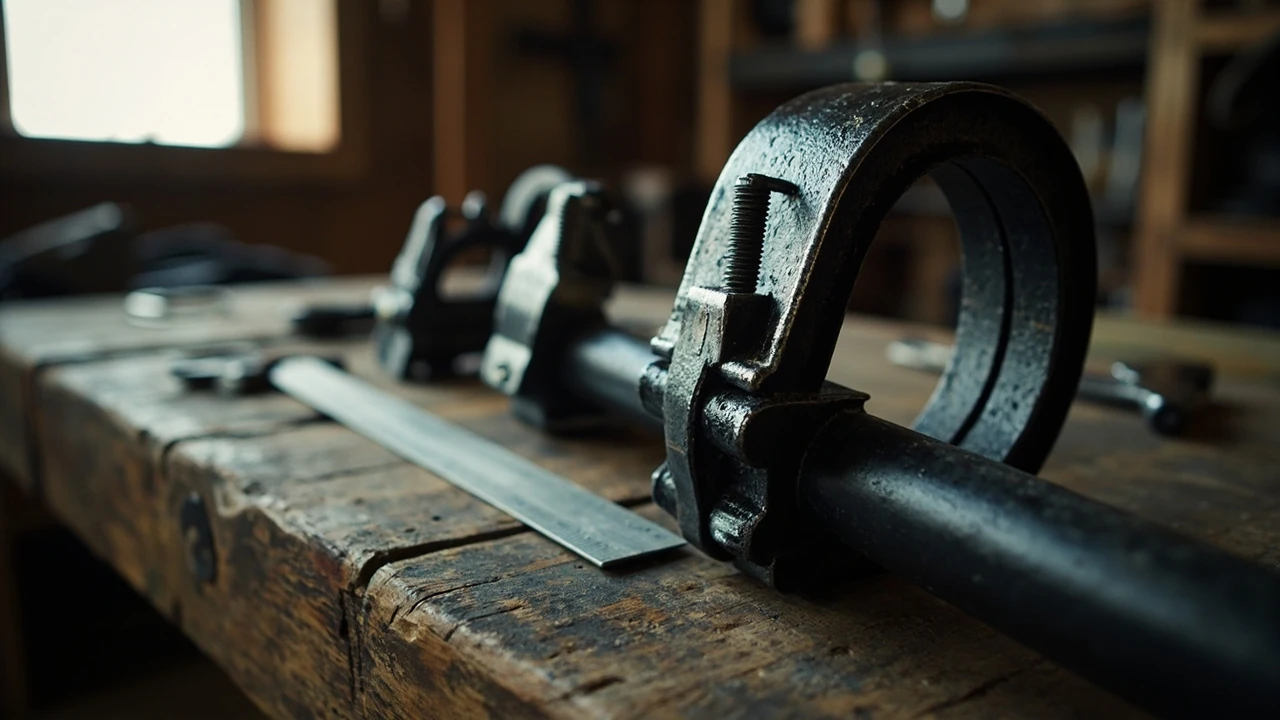

Klem pipa besi: what it is, how it works, and how to pick the right one
A klem pipa besi is one of those small fittings most people overlook until a pipe starts rattling, sagging, or vibrating against a wall. In its simplest form, it is a metal clamp that grips a pipe and fastens it to a structure so the pipe stays where it should. The phrase covers a wide family of products, from a light U-shaped bracket holding a half-inch water line to a heavy two-bolt clamp bolted to a steel beam in an industrial plant. Choosing the wrong one tends to fail quietly at first, then suddenly, which is why understanding the basic categories and load limits matters before you buy.
This guide walks through how a klem pipa besi actually works, the main types you will encounter, the materials and coatings that affect service life, and the practical checks that separate a reliable clamp from one that will corrode or crack within a season. It is written for homeowners, plumbers, fabricators, and facility maintenance teams who need a clear decision path rather than a catalog dump.
What a klem pipa besi actually does
A klem pipa besi is a mechanical fastener whose job is to hold a pipe in position and transfer its load to a fixed structure. That structure might be a wall, a ceiling joist, a steel I-beam, a Unistrut channel, or another pipe. The clamp does not join two pipes together. That is a coupling, a union, or a flange. The clamp only restrains the pipe so it does not move, sag, or vibrate beyond what the system was designed to handle.
Three forces act on a clamped pipe at any given time:
- Gravity: the weight of the pipe and whatever fluid or gas it carries.
- Thermal expansion: as temperature changes, metal pipes grow and shrink, which creates movement at every support point.
- Dynamic loads: vibration from pumps, compressors, water hammer, or external traffic.
A well-chosen klem pipa besi absorbs the static weight while allowing controlled movement where expansion is expected. A poorly chosen one either clamps too tightly and stresses the pipe, or clamps too loosely and lets the pipe rub against metal edges until it wears through.
Main types of klem pipa besi
Although the term sounds like a single product, the klem pipa besi family includes several distinct designs. Each is built for a different load, pipe material, and mounting situation.
U-bolt clamp (U-bolt klem pipa)
The U-bolt style is the most common household and light-commercial clamp. A U-shaped bolt wraps under the pipe, and a saddle plate sits on top. Two nuts tighten the assembly against a mounting bracket. U-bolts are inexpensive, easy to install, and work well on steel and copper water lines, gas lines, and sprinkler risers. Their weakness is that the contact area is small, so they can bite into softer pipe materials like copper or PEX if the installer is careless.
Two-bolt clamp (klem dua baut)
The two-bolt clamp uses a steel band with two bolted flanges, often with a rubber or EPDM liner inside. This style is common in heavy plumbing, HVAC, and industrial applications because the wider band distributes load more evenly around the pipe. Heavy-duty versions of this design are documented in a product overview of hot-dipped heavy-duty pipe clamps used for structural and tube support, which describes how a two-piece clamp facilitates a secure connection for industrial pipework with easy installation. That wider contact area is also why two-bolt clamps are preferred for insulated pipes and for steel pipe in vibration-prone locations.
Clevis hanger
A clevis hanger is a U-shaped bracket that cradles the pipe from below and hangs from a threaded rod. It is technically a hanger rather than a clamp, but the term klem pipa besi is sometimes used loosely to include it. Clevis hangers are standard in fire protection and large-diameter plumbing because they can support considerable weight and still allow the pipe to slide as it expands.
Split ring and band clamp
Split ring clamps consist of a ring that is split on one side, with a bolt that closes the gap to tighten the clamp around the pipe. Band clamps, including the perforated steel strap variety, wrap fully around the pipe. Both are used in retrofit situations where you cannot slide a closed ring over the end of a pipe.
Riser clamp
A riser clamp is a two-piece clamp designed for vertical pipes. The lower half sits on a structural support such as a floor sleeve or a bracket, and the upper half clamps the pipe down. Riser clamps carry the full weight of the vertical pipe column and are used at the base of multi-story plumbing stacks.
Beam clamp and pipe shoe
When a pipe needs to sit directly on a steel beam, a beam clamp attaches the support bracket to the flange of the beam. A pipe shoe is a curved saddle that the pipe rests inside. These are common in industrial plants and large mechanical rooms.
Materials and coatings that determine service life
The word besi in klem pipa besi translates to iron or steel, but in practice the body is usually mild steel, stainless steel, or malleable iron. The right material depends on the environment, not the marketing copy.
| Material / coating | Typical use | Where it works well | Where it fails |
|---|---|---|---|
| Zinc-plated mild steel | General indoor plumbing, HVAC | Dry, interior spaces | Outdoor, coastal, or wet areas where plating is scratched |
| Hot-dip galvanized steel | Outdoor pipe runs, exposed mechanical rooms | Moderate humidity, mild chemical exposure | Highly acidic or chloride-rich environments |
| Stainless steel (304) | Food processing, clean plumbing | Indoor and most outdoor settings | Strong chloride or marine exposure |
| Stainless steel (316) | Coastal, chemical, marine | Salt air, mild chemicals | Concentrated acids |
| Malleable iron, plain or coated | Decorative or historical plumbing | Dry, visible locations | Constant moisture unless coated |
| Rubber or EPDM lined | Copper, stainless, plastic pipe | Anywhere vibration or galvanic contact is a concern | High temperature steam without a heat-resistant liner |
Two practical points come out of this table. First, a coating is only as good as the scratch that eventually exposes the steel underneath, so drainage and isolation matter as much as the finish. Second, when a clamp grips a copper or stainless pipe directly, a rubber or EPDM liner is often added to prevent galvanic corrosion and dampen vibration. Skipping the liner on a long, vibrating run is one of the more common causes of premature failure.
Sizing a klem pipa besi correctly
Most selection problems come from sizing, not from the clamp itself. Pipe is sold by its nominal diameter, which is not the same as its outside diameter. A 1-inch nominal pipe can have an outside diameter anywhere from about 33 mm to about 42 mm depending on the standard it follows, so a clamp labeled for 1-inch pipe must be matched to the actual standard in use.
Use this quick method to size a clamp:
- Measure the outside diameter of the pipe with calipers, not the nominal label.
- Note the pipe material, because copper, steel, PVC, and PEX all use different outside diameters for the same nominal size.
- Pick a clamp whose internal diameter matches the measured outside diameter, with a tolerance of about 1 mm either way.
- If the pipe is insulated, size the clamp to the outer diameter of the insulation plus any required air gap.
- Confirm that the bolt thread and the mounting hole on the clamp match the bracket or threaded rod you already have on site.
For threaded rod hangers, the most common rod sizes are M8, M10, and M12, and the clamp must accept the rod diameter. Trying to fit a 12 mm rod through a 10 mm hole is a recurring problem on retrofit jobs and one of the easiest to avoid with a simple check.
Load and spacing: how many clamps a pipe actually needs
The number of clamps along a run is governed by pipe material, size, fluid weight, and whether the pipe is horizontal or vertical. Codes vary, but a few general rules are useful as a starting point. For horizontal steel water pipe in residential plumbing, support every 1.8 to 2.4 m for small diameters and every 3 m or more for larger diameters. For vertical runs, anchor at the base and at every floor level, and guide at intermediate points to control sway.
| Pipe nominal size (in) | Steel pipe max horizontal support spacing (m) | Copper pipe max horizontal support spacing (m) | Typical working load per support (kg) |
|---|---|---|---|
| 1/2 | 1.8 | 1.5 | 2 – 4 |
| 3/4 | 2.1 | 1.8 | 3 – 6 |
| 1 | 2.4 | 2.1 | 5 – 9 |
| 2 | 3.0 | 2.4 | 10 – 18 |
| 4 | 3.6 | 2.7 | 25 – 40 |
These are practical starting points, not substitutes for local code. Always check the engineer of record’s specification or the local plumbing code when the pipe is part of a fire protection, gas, or process system.
Choosing a klem pipa besi by application
The best clamp for a job is the one matched to the pipe, the fluid, and the environment. The following scenarios are the most common in both residential and light commercial work.
Residential water supply lines
For copper or PEX water lines inside a house, a zinc-plated U-bolt clamp or a two-bolt rubber-lined clamp on a wooden stud or a plastic pipe bracket is the standard choice. Spacing is typically every 1.5 to 2 m, with a clamp within 300 mm of every change of direction. Avoid metal-to-metal contact between copper and bare steel, because the two metals form a galvanic couple in the presence of moisture and the steel will eventually eat into the copper.
Drain, waste, and vent (DWV) pipe
DWV runs are usually larger in diameter and carry no pressure, so the support goal is to keep the slope consistent and the joints stress-free. A two-bolt or riser clamp anchored to the framing at the correct intervals is common. For cast iron stacks, the pipe is heavy, so the spacing shortens and the clamp should be rated for the full static load, not just the operating weight.
Heating and hot water systems
Hot pipes move as they heat and cool. A rigid clamp at every support point creates stress at the joints and at the equipment. The right approach is to use a fixed clamp at strategic anchor points and a sliding or guide clamp in between, so the pipe can expand in one direction while staying aligned. PEX and multilayer pipes generally want smoother sliding supports than copper because their coefficient of thermal expansion is different from metal.
Gas lines
Black steel or stainless gas lines require clamps that hold the pipe securely without squeezing the threads or distorting the pipe. A two-bolt clamp with a wide band and a rubber liner is a common choice in commercial settings. Residential gas lines often use a simple pipe strap screwed into the joist, but a heavier U-bolt or two-bolt klem pipa besi is appropriate where the line is exposed or runs across long spans.
Industrial and process pipe
In a plant environment, the klem pipa besi is often paired with a Unistrut or channel frame, threaded rod, and a spring or constant-effort support where movement is expected. The clamp itself is typically hot-dip galvanized or stainless. Material certifications and load ratings from the manufacturer matter here, because a clamp failure on a process line can shut down production or create a safety incident.
Exposed outdoor pipe
Outdoor runs face rain, sun, and sometimes road salt. Hot-dip galvanized or 316 stainless is appropriate, and the spacing should account for wind loading if the pipe is tall and exposed. Where the pipe is also subject to freezing, an insulated box or heat trace changes the support design, and the clamp must accommodate the larger outer diameter.
Installation mistakes that shorten clamp life
Most premature failures are installation problems rather than material defects. A few patterns show up often enough to call out:
- Over-tightening: a clamp that crushes the pipe insulation or deforms the pipe wall. Torque to the manufacturer’s spec, not until the bolt stops turning.
- Mixed metals without isolation: bare steel clamp directly on copper or stainless pipe, leading to galvanic corrosion at the contact point.
- Wrong anchor in the substrate: a clamp rated for 200 kg screwed into a hollow drywall anchor rated for 5 kg. The clamp itself is fine, the wall is the weak link.
- No allowance for thermal expansion: a rigid clamp at every point on a long hot run, with no sliding supports, leading to joint leaks within a season.
- Missing rubber liner where it is needed: on a vibrating run, the lack of a liner wears a groove into the pipe wall over time.
A simple torque wrench and a quick scan of the pipe routing for mixed-metal contacts will catch most of these before they become problems.
Inspection and maintenance on existing clamps
An installed klem pipa besi does not need a lot of attention, but it does need some. A practical inspection routine for a facility team is to walk the line once a year and look for:
- Visible rust on the clamp body, especially at the bolt threads and at the contact with the pipe.
- Cracks in any cast or malleable iron component, which usually appear as a hairline along a stress point.
- Loose bolts, which can be caused by vibration working the nut back off over time.
- Movement of the pipe inside the clamp, indicating that the clamp has loosened or the pipe has worn.
- Signs of leakage, staining, or mineral deposits on the pipe wall below a clamp, suggesting a leak at a fitting that the clamp was supposed to relieve but is not.
If rust is the issue, the fix is usually a replacement with a higher-grade coating rather than a wire brush and paint. Paint hides corrosion, but the underlying steel continues to thin. If the bolt is loose, replace the lock washer or use a nyloc nut rather than just tightening the existing hardware, because the original was likely loose for a reason.
How to compare two klem pipa besi options
Two clamps can look almost identical on a shelf but differ in load capacity by a factor of three or more. When comparing options, work through this short checklist:
- Verify the rated load on the manufacturer’s datasheet, not on the catalog image.
- Check the inside diameter range, not just the nominal pipe size, and confirm it matches the actual outside diameter of the pipe.
- Confirm the mounting hole or thread size is compatible with the support hardware on site.
- Look at the coating specification: zinc plating thickness, hot-dip galvanizing per the relevant standard, or stainless grade.
- Check whether a liner is included or available, especially for copper, stainless, or vibration-sensitive applications.
- Review whether the design allows axial movement, which is critical for hot or long runs.
For specialized applications, the right source for design and material guidance is the relevant industry body. For example, the Wikipedia overview of pipe support design covers the general engineering principles that sit behind how pipe clamps and hangers share loads, including the difference between rigid, guide, and spring supports. Reading that article alongside a specific product datasheet usually clarifies which features matter for a given installation.
Quick selection workflow
To bring the previous sections together, the following workflow covers most residential and light commercial selections without needing an engineering review.
- Step 1: identify the pipe material, nominal size, and outside diameter.
- Step 2: identify the fluid, temperature range, and whether the line is pressurized.
- Step 3: identify the environment: indoor dry, indoor humid, outdoor, coastal, or chemical.
- Step 4: pick the clamp type: U-bolt for light residential, two-bolt for heavier or insulated lines, riser clamp for vertical stacks, clevis hanger for long horizontal runs.
- Step 5: pick the material and coating: zinc for indoor dry, hot-dip galvanized for outdoor, stainless 304 for most non-coastal outdoor, stainless 316 for coastal or chemical.
- Step 6: pick the spacing from the relevant code or the table earlier in this guide, and add clamps at every change of direction and at both sides of every valve or heavy fitting.
- Step 7: install with the correct torque, add a liner where the pipe material needs one, and verify the anchor in the substrate is rated for the load.
That sequence covers about 90% of the decisions a non-specialist needs to make. For the remaining 10%, which usually involves high temperature, high pressure, fire protection, or unusual pipe materials, an engineer or a specialist supplier should review the selection.
Frequently asked questions
What is the difference between a klem pipa besi and a pipe hanger?
A clamp grips the pipe and is fastened to a nearby structure such as a wall, beam, or column. A hanger supports the pipe from above using a threaded rod and a bracket. In common Indonesian trade usage, klem pipa besi covers both functions, but the engineering distinction matters for thermal expansion and load path.
Can a klem pipa besi be used on plastic pipe?
Yes, but with care. PVC, PEX, and polypropylene pipe need a wider bearing surface and a rubber or EPDM liner to prevent the clamp from cutting into the pipe. Spacing is usually closer than for metal pipe because plastic is more flexible and sags more easily.
How do I know what size clamp to buy?
Measure the outside diameter of the pipe with calipers, then pick a clamp whose internal diameter matches that measurement. Do not rely on the nominal pipe size label alone, because nominal sizes are not consistent across pipe standards.
What is the best material for outdoor pipe clamps?
Hot-dip galvanized steel works for most outdoor settings. In coastal or chemical environments, upgrade to 316 stainless steel. Avoid plain zinc-plated steel outdoors, because scratches in the plating will rust quickly.
Do I need a rubber liner on a klem pipa besi?
Use a liner whenever the pipe is copper or stainless and the clamp body is bare steel, whenever the pipe is plastic, and whenever the run is subject to noticeable vibration. The liner prevents galvanic corrosion and dampens vibration that would otherwise wear the pipe wall.
How tight should the bolts be?
Follow the manufacturer’s torque specification. If no spec is available, tighten until the clamp is firmly seated and the pipe does not move under hand pressure, then stop. Over-tightening will crush insulation, deform pipe walls, and stress the bolt threads.
Can I paint over a rusty klem pipa besi?
Painting over rust is a cosmetic fix, not a structural one. Once the steel has thinned enough to flake, the clamp should be replaced. A wire brush and a cold-galvanizing compound can extend the life of a lightly rusted clamp, but heavy rust means the part has lost material and is no longer rated for the original load.
How often should pipe clamps be inspected?
In a residential setting, a quick visual check every couple of years is usually enough. In a commercial or industrial setting, an annual walk-down is standard. Inspect more often if the line carries a hazardous fluid, runs at high temperature, or is exposed to vibration or corrosive atmosphere.
Are klem pipa besi universal across standards?
No. Different countries and industries use different pipe standards, which means a clamp that fits a 1-inch nominal steel pipe will not necessarily fit a 1-inch nominal copper pipe. Always match the clamp to the actual outside diameter of the pipe in the standard you are using, not the nominal label.
What is the most common cause of klem pipa besi failure?
Corrosion at the contact between the clamp and the pipe, especially when mixed metals are used without a liner, is the most common cause. The second most common is over-tightening, which deforms the pipe and creates a stress concentration. Both are avoidable with proper material selection and torque control during installation.