
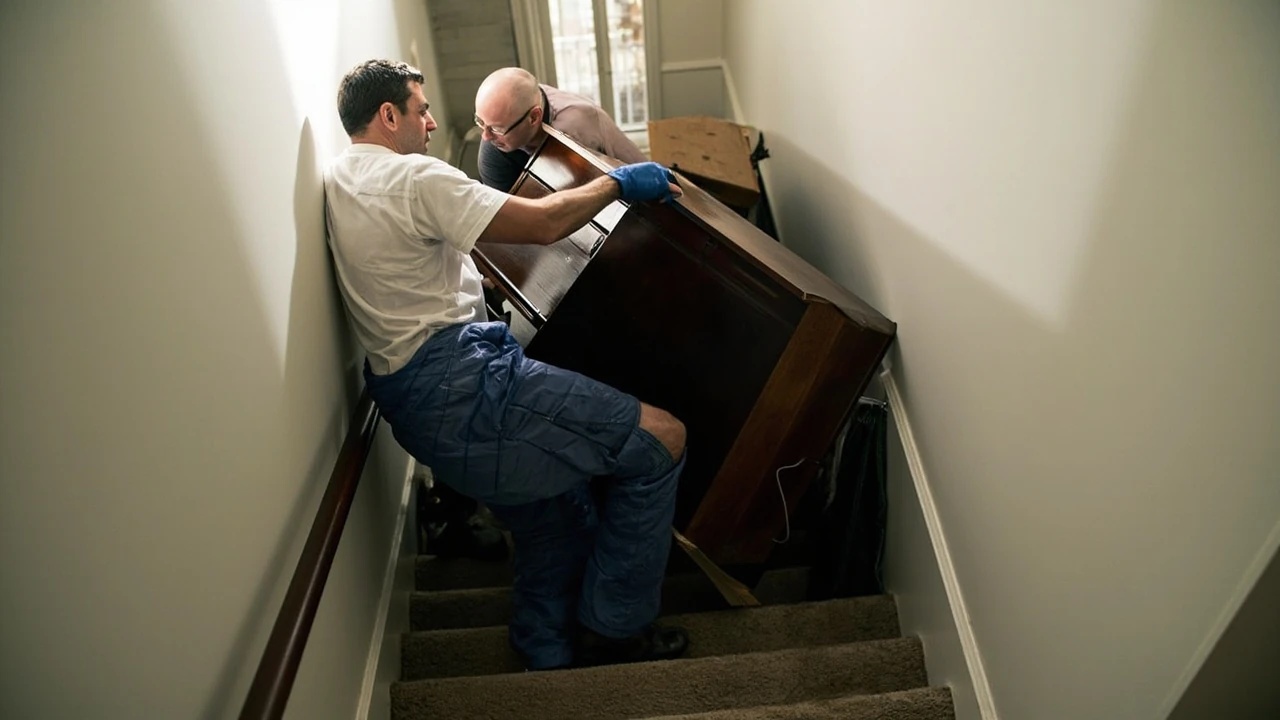

Piano movers: what to know before hiring one
A grand piano weighs between 500 and 1,200 pounds, and even a modest upright sits between 300 and 800. Beyond the weight, an acoustic piano is a fragile, precisely tuned instrument that can crack, twist out of alignment, or lose its sound if it is dragged across a threshold or laid on its side without planning. That is the gap professional piano movers fill, and it is bigger than most people expect before they book a job.
Standard household movers are usually not the right team for the job. Pianos need special dollies, ramp boards, skid boards, padded wraps, and a crew that has rehearsed the choreography of getting an awkward, top-heavy object through a doorway. This guide walks through what piano movers actually do, how the job is priced, the questions that separate a serious crew from a risky one, and what a homeowner can do to prepare.
What piano movers actually do on a job
The visible part of piano moving is a small share of the work. Most of the day is spent on preparation, protection, and route planning before the instrument is moved a single foot.
The pre-move walkthrough
Reputable piano movers do not quote a job from a phone call alone. They ask about the piano type, the floor it is on, the floor it is going to, the number of stairs, the width of doorways, and whether there are any tight turns, landings, or elevators in the path. A good estimator may also ask whether the piano is in tune before the move, because a piano that was already drifting sharp or flat will still sound the same way afterward, and a bad note will not be the mover’s fault.
Wrapping and padding
The piano gets fully wrapped before it leaves its current spot. Pianos are not just heavy, they are also finished with lacquer or polyester that scratches easily and holds dents. Movers use thick moving blankets, corner protectors, and stretch wrap to cover the lid, keyboard lid, legs, and body. A grand piano is usually partially disassembled: the lyre, the lid, the music desk, and sometimes a leg are removed and carried separately. A baby grand or a concert grand is laid on a padded piano board with locking casters so the crew can roll the entire shell as one unit.
Loading and transport
For an upright, the crew tips the piano back onto a heavy-duty piano dolly, straps it in, and rolls it to the truck. For a grand, the piano on its board is rolled to a ramp, then pushed into the truck. Inside the truck, the piano is secured with ratchet straps to wall rails so it cannot shift on a hard brake or a rough road. Climate control matters on long hauls. A piano that sits in a hot unventilated truck can have its soundboard swell and its glue joints soften, so most piano-only movers use enclosed, temperature-managed trucks.
Delivery and placement
At the destination, the crew reverses the process. The piano is rolled, lifted, or carried to its exact spot, the legs and lyre are reattached, the lid is set, and the casters are set on protective cups so the instrument does not slide on a hard floor. The movers usually do a final walk-through with the customer, confirm the placement, and leave tuning for a separate technician, since the instrument will need to settle for a few weeks before a stable tuning.
Piano types and why they change the job
Not all pianos are the same challenge. The instrument’s type, size, and finish are the biggest drivers of crew size, equipment, and price. The table below summarizes how the main categories compare.
| Piano type | Typical weight | Crew size | Special equipment | Disassembly needed |
|---|---|---|---|---|
| Spinet or console upright | 300-450 lb | 2 movers | Piano dolly, blankets, ramp | None |
| Studio upright | 400-600 lb | 2-3 movers | Piano dolly, stair-climber dolly, blankets | None |
| Full-size upright | 500-800 lb | 3 movers | Heavy-duty piano dolly, stair rigging | None |
| Petite grand (4’7″ to 5’5″) | 500-700 lb | 3 movers | Piano board, ramp, leg removal tools | Lyre, lid, one leg |
| Baby grand (5’6″ to 6’2″) | 600-900 lb | 3-4 movers | Piano board, ramp, padding | Lyre, lid, two legs |
| Concert grand (7′ to 9′) | 900-1,200 lb | 4-5 movers | Custom cradle board, multiple ramps, padding | Lyre, lid, all three legs |
| Digital or stage piano | 30-80 lb | 1-2 movers | Standard furniture dolly | None |
Even a small upright benefits from a dedicated piano crew. A regular furniture moving company can usually move the weight, but they rarely own the right dollies, the padded boards for a grand, or the straps needed to keep the soundboard from flexing on a stairway.
How piano movers price a job
Piano moving is not a flat-rate industry the way parcel shipping is. Quotes are built from a few concrete inputs, and a good estimate reflects them openly.
The main pricing factors
- Instrument type and size. A spinet is a quick two-person job. A concert grand is a half-day project with four or five movers and a custom board.
- Distance and access. The mileage between the two locations matters, but the bigger cost is often the difficulty inside the building. Long stairways, tight corners, narrow doorways, and missing elevators all add time.
- Stairs. Stairs are the single most common reason a piano move gets expensive. A flight of straight stairs adds labor, and a curved stairway with a tight landing can add significantly more because the piano often has to be turned or partially lifted by hand.
- Floor count and elevator availability. Moving a piano up or down more than one floor without a freight elevator usually requires additional rigging and another mover or two.
- Timing. Same-day, weekend, and after-hours moves often carry a surcharge. Long-distance piano moves are usually billed by the mile plus hourly labor on each end.
- Insurance and valuation. Standard liability coverage is usually included, but full-value protection that pays the replacement cost of the piano in case of damage costs more.
Typical price ranges in the United States
These are common ranges, not published rates. Any final quote should be confirmed in writing with a real estimator.
| Job type | Typical price range | What is included |
|---|---|---|
| Local upright, ground floor to ground floor | $150-$350 | Two movers, one piano dolly, blankets, short truck trip |
| Local upright with one flight of stairs | $250-$500 | Two to three movers, stair rigging, blankets |
| Local baby grand, single story, no stairs | $300-$600 | Three movers, piano board, leg removal, padding |
| Local grand with stairs or difficult access | $500-$1,200 | Three to four movers, board, custom rigging, padding |
| Long-distance upright (over 100 miles) | $600-$1,500 | Crating or full padding, dedicated truck, mileage |
| Long-distance grand (over 100 miles) | $1,000-$3,000+ | Full disassembly, climate-controlled transport, reassembly |
A quote that comes in well below these ranges is not a bargain. It usually means the company is using general household movers, does not carry piano-specific insurance, or plans to add fees after the crew is on site.
Questions to ask before you book
The point of the screening call is to find out whether the company actually specializes in pianos. General movers can be fine for some uprights, but a serious piano crew answers these questions with confidence.
- How many piano moves does your crew do in a typical month? Specialists usually do many, not a few.
- Do you carry piano-specific insurance, and what is the value limit per instrument? Ask for the policy on request.
- What equipment do you bring for my piano type? Look for piano dollies, piano boards, leg crates, and ratchet straps in the answer.
- Will you remove and reattach the legs of a grand on site, or do you expect the customer to do that?
- What happens if the piano is damaged during the move? Get the answer in writing.
- Is the quote flat-rate or hourly? Hourly quotes can balloon if access turns out to be harder than expected.
- Do you subcontract piano moves to a general freight company? If yes, the people on site may not be the ones you vetted.
The crew’s answers are usually a stronger signal than the company’s marketing. A piano mover who hesitates on equipment details, or who refuses to describe insurance limits, is the wrong piano mover for an instrument worth several thousand dollars.
Red flags when hiring piano movers
Most piano damage happens when corners are cut. The following signs are worth treating as warnings.
- A quote without an on-site or video walkthrough. Estimating a piano move from a text message or a one-line description is almost always wrong.
- No written agreement. Verbal quotes leave the customer with no recourse if the price changes on moving day.
- No piano-specific equipment. If the crew shows up with a regular appliance dolly and no padding, send them home.
- Pressure to tip in cash or pay the full balance up front. Standard practice is a small deposit on booking and the rest on delivery.
- Vague answers about insurance. “We are fully covered” is not a substitute for a policy number and a coverage limit.
- Refusal to share crew experience. A company that has been in business for years can usually name past jobs or show photos of similar work.
Trust is important, but verification matters more. The Federal Motor Carrier Safety Administration’s carrier safety resources are a useful starting point for checking any interstate mover, including piano specialists.
How to prepare your home for piano movers
Most of what a homeowner can do is remove obstacles and clear the path. The piano crew handles the instrument, but they need a runway to work in.
- Move furniture, rugs, plants, and décor away from the path between the piano and the door.
- Take photographs off the walls along the route, especially in tight hallways. Bumps happen.
- Remove any doors from hinges if the doorway is too narrow for the piano and the frame together.
- Cover nearby hardwood or tile floors with old blankets or ram board to protect them from the dolly wheels.
- Keep children and pets in a separate room until the piano is secured. The weight and the equipment are dangerous.
- Confirm parking for the moving truck. A long carry from the curb to the door is a real cost driver.
- Reserve the freight elevator if the building has one, well before moving day.
Most piano crews appreciate a short, calm conversation before they start. They like to know which direction the piano needs to face at the destination, where the bench should go, and whether there is anything fragile in the room to avoid.
Insurance, liability, and what is actually covered
Piano For additional context, movers operate under a mix of standard moving liability, full-value protection, and sometimes a separate fine-arts rider for high-end instruments. The differences matter at claim time.
| Coverage type | What it pays | Typical cost | Best for |
|---|---|---|---|
| Released-value protection | A small per-pound figure, often far below the piano’s value | Usually included | Low-value uprights, short moves |
| Full-value protection | Repair, replacement, or cash settlement at the item’s declared value | Percentage of declared value, often 1-2 percent | Mid-range uprights, most grands |
| Separate fine-arts rider | Bespoke coverage through a third-party insurer for high-end or antique pianos | Based on appraisal and route | Concert grands, vintage Steinways, restored instruments |
For most homeowners, full-value protection at the piano’s appraised value is the practical choice. Read the certificate of insurance before the move and check that the policy is in force on the moving date. A declaration page from a real insurer is what counts, not a verbal assurance.
After the move: tuning, settling, and re-leveling
A piano that was just moved will not hold a stable tuning for a few weeks. The strings, soundboard, and pin block all shift slightly as the instrument settles into a new home with different temperature and humidity. Professional tuners usually ask customers to wait two to four weeks before scheduling a full tuning.
In the meantime, there are a few small steps that protect the instrument.
- Keep the room humidity between roughly 40 and 50 percent, ideally with a hygrometer. Dry winter air and damp basement air are both bad for a soundboard.
- Avoid placing the piano against an exterior wall, in direct sunlight, or near a heating vent.
- Lock the fallboard and keyboard cover when the piano is not in use to keep dust out of the action.
- Set the caster cups so the piano cannot roll on a hard floor.
- Do not play loudly for the first day or two if the instrument was moved in very cold weather, because the soundboard needs to acclimate.
If the piano was tuned before the move and the new room has very different humidity, expect the new tuner to need more than one visit. That is normal and not a sign of a bad move.
Special situations: long-distance, stairs, and antique pianos
Some jobs are not standard, and a few deserve their own attention.
Long-distance piano moves
A move over about 100 miles usually means the piano rides in a dedicated, often climate-controlled truck rather than a shared freight van. Some companies crate the instrument for the trip. Crating costs more but reduces the risk of road vibration and weather exposure. The arrival window is wider than for a local move, so plan to be flexible by a day or two.
Stairs, landings, and tight turns
Stairs are where the crew earns its fee. A piano board with stair wheels, a stair-climber dolly, and proper rigging on a curved staircase take real training. Ask the company whether the lead mover has personally done a similar staircase before. Pictures from past jobs are a fair ask.
Antique and high-value pianos
For a restored Steinway, a vintage Mason & Hamlin, or a custom-built instrument, expect the company to ask for a written appraisal and to recommend a fine-arts rider. The crew may also want to photograph the piano before and after, with a witness, to document its condition. That is good practice and worth encouraging.
Why general movers are usually not the answer
Household moving companies are excellent at couches, dressers, and boxes. The same crew on a piano is a different problem. Pianos are unusually heavy, awkwardly balanced, and expensive to repair when the case, lid, or finish is damaged. A general mover may not own a piano board, may not carry a stair-climber dolly, and may not have insurance that covers a fine instrument.
That is also the reason piano-only companies exist. They buy specialized equipment, train their crews on the same handful of maneuvers, and limit their insurance exposure by sticking to one type of object. A specialty mover is not a luxury for a piano, it is closer to a basic safety measure.
Even a small upright that “looks easy” can go badly. A piano rolled off a ramp without a strap can slide, tip, and crush a leg. A grand pushed down a hallway without a piano board can punch through drywall. The cost of the specialist crew is small compared to the cost of a soundboard crack or a snapped lid.
Common myths about moving a piano
A few ideas come up often enough that they are worth correcting directly.
- “It is just heavy furniture.” Pianos are heavy, but they are also tuned instruments. The soundboard, bridges, and pin block can all be damaged by a hard bump.
- “Two strong friends and a pickup truck are enough.” For an upright on the ground floor, sometimes. For stairs, a grand, or any long distance, the risk is not worth the savings.
- “Movers will tune it when they arrive.” Movers move. Tuning is a separate trade, and a freshly moved piano will not hold a tuning anyway.
- “It will be fine on its side.” Laying a piano on its side is risky for the action and the soundboard. Specialist movers rarely do it.
How to compare two piano moving quotes
When two estimates look very different, the lower one is usually cheaper because of something the higher one includes. A side-by-side comparison is the simplest way to see it.
| Item to compare | Quote A | Quote B |
|---|---|---|
| Number of movers | ||
| Hourly estimate or flat rate | ||
| Piano-specific equipment included | ||
| Stair fee or rigging fee | ||
| Insurance coverage and limit | ||
| Travel time and mileage | ||
| Tuning, if offered | ||
| Cancellation and reschedule policy | ||
| Total all-in price |
The cheapest quote is rarely the best one if it skips insurance, equipment, or stair planning. The right comparison is the all-in price for the same scope of work, with the same coverage.
What a good piano moving day looks like
Most moves follow a predictable rhythm, and knowing it helps on the day of the job.
- The crew arrives a few minutes early and walks the route with the customer.
- The piano is wrapped and any removable parts are taken off and labeled.
- The piano is tipped, rigged, or rolled onto a board and dollied to the truck.
- The instrument is strapped in and the crew confirms placement with the customer before leaving.
- At the destination, the crew reverses the process and places the piano where the customer wants it.
- Legs, lyre, and bench are reattached, the wrap is removed, and the area is cleaned up.
- Payment is settled, a receipt is provided, and a follow-up tuning is scheduled for a few weeks later.
A move that follows that pattern usually takes one to three hours of on-site time, plus travel. Anything that drags on for much longer is often a sign of access problems the estimator missed.
A short note on the history of the trade
Piano moving has existed for as long as pianos have lived in private homes. The cartoon short Piano Mover, a 1932 Columbia Pictures release featuring the character Krazy Kat, is a reminder that the basic challenge of getting a piano up to a high floor has been a source of both real engineering and humor for nearly a century. The trade has professionalized since then, but the geometry of the problem is unchanged.
Frequently asked questions
How far in advance should I book piano movers?
For a local move, one to two weeks is usually enough, though peak moving months, May through September, can require more lead time. For long-distance moves, three to four weeks is safer because the route and truck have to be planned.
Do piano movers also tune pianos after the move?
Most do not. Moving and tuning are separate trades, and a freshly moved piano will not hold a stable tuning for two to four weeks. Many piano movers will recommend a technician and sometimes include the first tuning in the price, but it is worth asking.
Can piano movers take a piano up or down a curved staircase?
Yes, but it is one of the more expensive parts of a job. A crew that does this regularly will use a piano board, a stair-climber dolly, and sometimes partial rigging. Ask the company whether the lead mover has handled a similar staircase before booking.
Is it safe to move a piano in very cold or very hot weather?
Short moves in mild weather are low risk. Long moves in extreme heat or cold benefit from a climate-controlled truck. Extreme temperature swings can cause the soundboard to crack or the glue joints to fail, so for a long-distance move, the truck matters more than the season.
What happens if a piano is damaged during the move?
If the company carries full-value protection, the customer files a claim and the mover pays for repair, replacement, or cash settlement up to the declared value. If the company only carries released-value protection, the payout is far lower. Always confirm the coverage type in writing before the move.
How many movers does it take to move an upright piano?
Most uprights need two movers, and a full-size upright or any upright on stairs usually needs three. Companies occasionally send two for a small upright on the ground floor, but a third mover is the safer default.
Should I tip piano movers?
Tipping is appreciated but not required. A common range is $20 to $40 per mover for a local job, more for a long or difficult move. The same rules apply as for any service crew: cash or a small gift, with a thank-you note if the work was particularly careful.
Can I move a digital piano myself?
For most digital pianos, yes. They weigh under 100 pounds and do not need a piano board, a stair-climber, or a specialist crew. A regular furniture dolly and a friend are usually enough. The exception is a digital piano that is built into a heavy cabinet, which is closer to a regular furniture move.
Do piano movers need access to electricity at the destination?
Not usually. The crew uses muscle and equipment, not power tools, to set the piano. Electricity may matter if you have a digital piano or a self-playing acoustic that needs to be plugged in, but that is separate from the move itself.
What is the difference between a piano board and a regular furniture dolly?
A piano board is a long, padded wooden or composite plank with locking wheels designed to carry a grand piano on its side. A furniture dolly is a small platform on four casters used for boxes and dressers. The two pieces of equipment are not interchangeable, and a crew that arrives without a piano board is not equipped to move a grand.
A practical closing checklist
Before the crew arrives, run through this short list. It covers the parts of the job that are easiest to forget.
- Confirm the quote in writing, including stairs, insurance, and the declared value of the piano.
- Clear the path from the piano to the door at both locations.
- Photograph the piano before the move for your own records.
- Reserve the elevator or arrange parking for the truck.
- Set the humidity in the destination room to a stable 40 to 50 percent if possible.
- Schedule a tuning for two to four weeks after the move.
The right piano movers do this work every week, and a good job often looks calmer than the customer expected. The preparation on both sides is what makes that possible. For anyone weighing a quote from a general mover against a quote from a piano-only crew, the safer answer is almost always the piano-only crew, especially for any instrument larger than a console upright or any move that involves a staircase.