
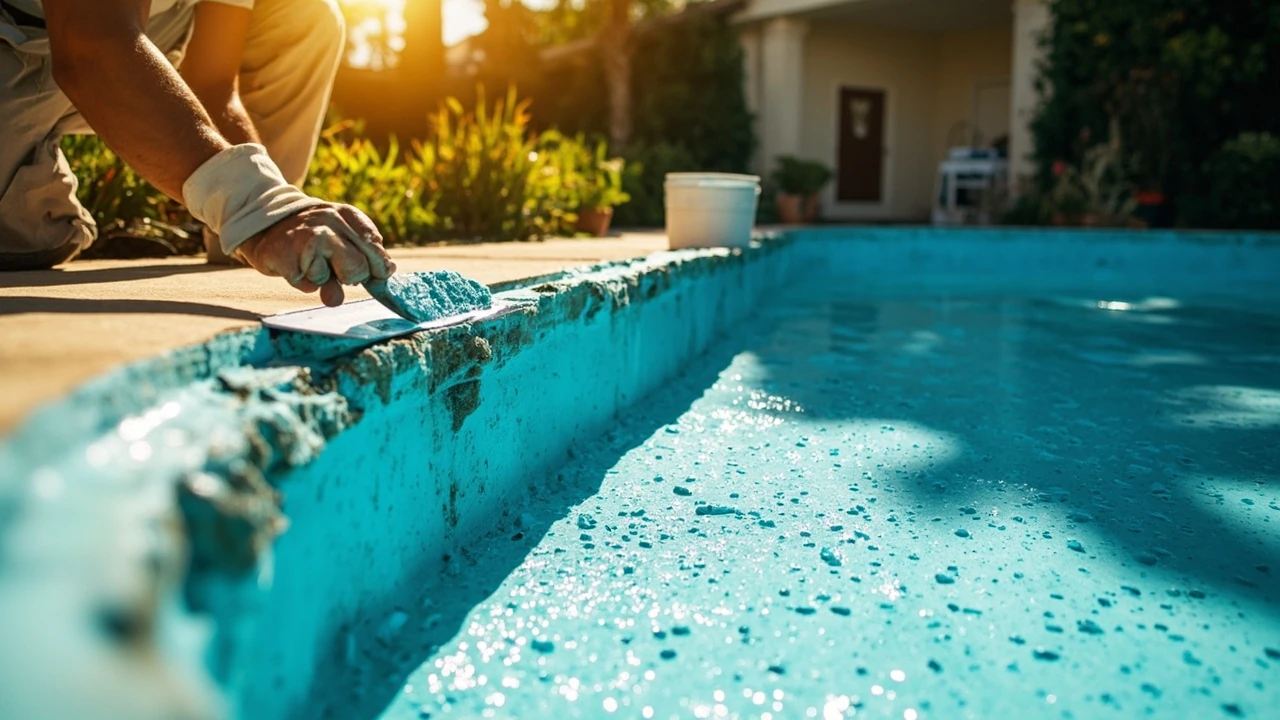

Pool resurfacing: what it actually does to a swimming pool
Pool resurfacing is the process of removing the worn top layer of a swimming pool’s interior and applying a new finish. The pool shell stays in place, but the surface that holds water and touches swimmers gets replaced. Homeowners usually think about resurfacing when the pool starts to look rough, stained, or simply tired, and the goal is to restore a smooth, watertight, easier-to-clean interior without rebuilding the structure.
For most in-ground concrete or gunite pools, the original surface is a layer of plaster, quartz, pebble, or tile. That layer is the thinnest part of the pool, and it takes the most abuse: pool chemistry, sunlight, freeze-thaw cycles, and constant contact with water. Over time, it wears down. Resurfacing addresses that single layer. It does not fix structural cracks in the shell, plumbing leaks, or deck movement, although it often happens at the same time as those repairs.
A useful way to think about pool resurfacing is as scheduled maintenance rather than an emergency. Plaster finishes in a residential pool typically last somewhere between roughly 10 and 20 years depending on the material, water balance, and climate. Quartz and pebble finishes push that number higher. When the surface reaches the end of its useful life, the choice is usually between resurfacing and tolerating a pool that looks worse every season.
Signs a pool needs resurfacing
A pool rarely fails overnight. Instead, the surface gives a series of warnings that get easier to read each year. Homeowners who learn to spot these signs early can plan a project on their own timeline rather than rushing into a leak or a stained mess.
- Rough texture underfoot or on the walls, often described as feeling like sandpaper
- Visible etching, pitting, or small craters in the plaster
- Widespread staining that does not lift with brushing or a stain treatment
- Persistent calcium scale along the waterline that returns quickly after cleaning
- Plaster, quartz, or pebble aggregate coming loose and collecting on the floor
- Cracks in the surface that recur after patching, especially in multiple spots
- More frequent need for chemicals to keep water clear, often linked to a porous surface
One or two of these signs in a relatively new pool may point to a water-chemistry problem rather than a resurfacing need. The same signs in a pool that is 12 to 20 years old usually mean the surface has reached the end of its service life and resurfacing is the right conversation to start.
What pool resurfacing does and does not fix
It helps to separate the surface from the structure before any contractor walks the pool. Many disappointed homeowners expect resurfacing to solve problems that live below the finish layer.
| Problem | Resurfacing addresses it | Usually needs a different repair |
|---|---|---|
| Rough, etched, or pitted plaster | Yes | No |
| Widespread surface staining | Yes | No |
| Hairline surface crazing | Yes | No |
| Single structural shell crack | Sometimes, with routing and hydraulic cement | Often requires structural repair |
| Plumbing leak | No | Pressure test and plumbing repair |
| Bond beam movement at the tile line | No | Tile, coping, or structural repair |
| Vinyl liner floating or tearing | No, this is a different pool type | Liner replacement |
Most reputable resurfacing companies will perform a pre-job inspection that separates surface issues from structural ones. Homeowners who skip that step sometimes pay for a new finish and still see the same problem because the cause was under the surface all along.
Common pool resurfacing finishes
Finish choice drives both the look of the pool and how long the new surface is likely to last. Each material has tradeoffs, and the right pick depends on budget, climate, and how the pool is used.
Standard white plaster
White plaster is the classic pool finish: a mixture of white cement, marble dust or limestone aggregate, and water. It is the least expensive option and gives the bright, light-reflecting look many people associate with a traditional pool. The tradeoff is durability. Standard plaster is more reactive to water chemistry and tends to show etching, scaling, and color variation sooner than engineered finishes. In a well-managed pool, modern plaster blends are often expected to last roughly 10 to 15 years, with results that vary based on the local climate and the homeowner’s chemistry habits.
Quartz aggregate
Quartz finishes blend plaster with colored quartz aggregate, which is one of the hardest minerals used in pool surfaces. The quartz is exposed slightly during the final troweling, creating a denser, more stain-resistant surface than standard plaster. Color choices range from soft blues to grays and tans. Lifespan is often in the 15-year-plus range, and many manufacturers back quartz finishes with longer warranties than standard plaster.
Pebble aggregate
Pebble finishes use small, smooth river pebbles bound in cement. The exposed pebble texture is naturally slip-resistant and tolerates a wide range of water chemistry without visible damage. Pebble surfaces are usually the longest-lasting of the cementitious options, often 20 years or more, and they give the pool a natural, lagoon-like appearance. The downside is a rougher feel underfoot and a higher material cost.
Tile
Tile is the premium finish, either as a full surface or as a waterline band combined with another finish. Glass and porcelain pool tiles resist staining, hold up to aggressive water chemistry, and can last decades when properly installed. Tile is also the most expensive option and requires a skilled installer. A common compromise is a tile waterline with plaster, quartz, or pebble on the floor and walls.
Other options
Some contractors offer polished aggregate, which is a pebble surface that is ground smooth for a sleeker feel, and a small number of specialty finishes that combine glass beads or other aggregates. These are worth asking about, but availability varies by region and installer.
How the pool resurfacing process works
The exact steps vary by finish type and contractor, but a standard resurfacing project follows a predictable sequence. Knowing the steps helps homeowners plan for the disruption and ask better questions during the estimate.
- Drain the pool and let the surface dry to the moisture level the new finish requires
- Cut out and remove the old surface, usually by chipping or hydroblasting, down to the shell
- Inspect the shell and repair any hollow spots, cracks, or bond beam issues
- Tile, coping, and any plumbing penetrations are addressed before the new finish goes on
- Bond coat or scratch coat is applied so the new finish adheres to the shell
- New finish is hand-troweled, sprayed, or set depending on the material
- The pool is left to cure, with the surface kept moist or filled according to the product’s instructions
- Startup chemicals are balanced and the pool is brought back into service
From drain to swim-ready, a typical residential pool resurfacing project takes somewhere between about a week and three weeks depending on the size of the pool, the finish chosen, weather, and how long the curing and startup phases last. Pebble and tile jobs often run longer than simple replasters.
Planning a pool resurfacing project
Resurfacing is more disruptive than most pool services but less disruptive than a full renovation. A small amount of planning before the work starts prevents the most common headaches.
Timing the project
Most homeowners schedule pool resurfacing in the off-season or shoulder seasons. Spring and early summer are the busiest times for pool contractors, and that demand pushes prices up and schedules back. Late fall through early spring usually means faster scheduling and more attention from crews, provided the weather stays within the installer’s working range. Very cold weather can slow cure times for cementitious finishes, and freezing conditions during the cure window can damage a fresh surface.
Budget expectations
Pool resurfacing cost depends on region, pool size, finish choice, and the condition of the shell. As a planning reference, residential resurfacing in the United States commonly falls into broad ranges, and a useful way to think about it is by finish type rather than by total dollar number that may shift with local labor markets.
| Finish type | Typical relative cost | Expected service life | Key tradeoff |
|---|---|---|---|
| Standard plaster | Lower | Around 10 to 15 years | Most affordable, least durable |
| Quartz aggregate | Moderate | Around 15 years or more | Good balance of cost and durability |
| Pebble aggregate | Higher | Around 20 years or more | Longest lasting cementitious option, rougher feel |
| Tile | Highest | Several decades when properly installed | Premium look, premium cost, skilled labor needed |
Homeowners should ask for a written scope that spells out draining, surface prep, shell repairs, finish material and brand, tile work, startup chemistry, and any warranty terms. Verbal estimates that lump everything into one number tend to produce change orders once the old surface comes off.
Preparing the site
Before the crew arrives, the pool area should be cleared of patio furniture, potted plants, and fragile landscaping near the work zone. Pets and children need to be kept away from an open, drained pool. Any equipment near the pool, such as salt cells, heaters, or automated covers, should be identified so the contractor can protect or bypass them as needed.
Choosing a pool resurfacing contractor
Resurfacing is a trade where experience shows in the finished surface. A pool replastered by a careful crew can look great for years; the same finish installed by a rushed crew can show trowel marks, color streaks, or early etching. Selection matters more than brand of material.
- Look for a company that specializes in pool resurfacing rather than a general handyman or landscaper
- Ask how many pools they have resurfaced in the last 12 months and whether they can share local references
- Confirm the crew is licensed and insured for pool work in your state, and ask for proof of liability and workers’ compensation coverage
- Request the exact product name, color, and manufacturer of the finish they plan to use
- Ask how they handle startup chemistry and what they recommend for the first 30 days
- Get warranty terms in writing, including what is and is not covered
It is reasonable to get two or three written estimates. The cheapest bid is not always the worst choice, and the most expensive is not automatically the best, but large gaps between bids usually mean the scopes are different. Comparing the line items is more useful than comparing the totals.
After the resurfacing: the startup and first 30 days
What happens in the first month after a new finish is installed has a large effect on how long that finish will last. A common cause of early plaster problems is a rushed or poorly managed startup.
Fresh cementitious finishes are highly alkaline and reactive. The traditional approach is a careful startup that balances pH, calcium hardness, alkalinity, and cyanuric acid over the first week or two, often with the filter running 24 hours a day. Brush the new surface daily during the first week to remove plaster dust and expose the finish evenly. Avoid shocking the pool with high doses of chlorine during this window, and follow the specific guidance the installer provides for the chosen finish.
For a useful walkthrough of the resurfacing process, finish choices, and what to expect from a professional project, homeowners can review a detailed resurfacing process guide from Anthony & Sylvan that covers the same decisions in more depth.
On the broader topic of how pool surfaces and pool water interact, the overview of swimming pool design and maintenance in the public reference literature is a good background read for homeowners who want to understand how the finish fits into the pool as a system.
Common mistakes to avoid
Most resurfacing problems are not caused by the material. They are caused by decisions made before and after the work. A short list of the issues that come up most often is worth keeping on hand.
- Resurfacing without addressing a known plumbing leak or structural crack first
- Choosing a finish based only on color rather than on chemistry tolerance and expected lifespan
- Filling the pool from a well with hard water, which can leave scale on a brand-new surface
- Skipping the daily brushing during the first week after fill-up
- Letting the new plaster sit in sunlight and heat during cure without keeping it moist where the process requires it
- Ignoring the startup chemical schedule, which can etch the new surface within weeks
How pool resurfacing compares to other major pool projects
Resurfacing is one of several large pool projects a homeowner may face, and it is helpful to know where it sits next to the others.
| Project | What it addresses | Relative cost vs. resurfacing | Typical disruption |
|---|---|---|---|
| Pool resurfacing | Worn surface layer | Baseline | Pool out of service for weeks |
| Tile and coping replacement | Waterline tile and deck edge | Often combined with resurfacing | Similar to resurfacing |
| Equipment replacement (pump, filter, heater) | Mechanical systems | Often lower than resurfacing | Pool usually stays in service |
| Full pool renovation | Surface, tile, equipment, deck, shape | Several times the cost | Pool out of service for months |
| New pool construction | Building a pool from scratch | Highest | Multi-month project |
For a homeowner who is also weighing broader property work, a useful comparison is between pool resurfacing and major home renovations, which can share the same planning questions about timing, contractor selection, and disruption. Our guide to bathroom remodeling as a practical planning resource covers many of the same contractor-selection and scheduling issues, even though the trades are different.
Maintaining a resurfaced pool so the new finish lasts
The single biggest factor in how long a new pool surface lasts is water chemistry. Surfaces do not wear out from water alone. They wear out from water that is out of balance, sitting in the sun, and treated inconsistently.
- Test water weekly and keep pH, total alkalinity, calcium hardness, and cyanuric acid within the ranges the finish manufacturer recommends
- Brush the walls and floor weekly, even after the startup period, to prevent scale and algae from taking hold
- Clean the waterline regularly so oils and sunscreen do not etch the surface at the most visible spot
- Shock the pool on a schedule rather than waiting for the water to turn green
- Run the filter long enough each day to turn over the full volume of water, especially during heavy use
- Address small cracks and chips quickly, before they grow into larger repairs
For homeowners who treat the new surface as part of a routine rather than an afterthought, the payoff is simple: the next resurfacing is years further away than it would otherwise be.
Quick checklist before signing a resurfacing contract
Walking into the project with a short list of items to confirm keeps the scope clear and reduces surprises once the pool is drained.
- Written scope that lists every step from draining through startup
- Exact finish brand, product name, and color
- Number of coats and total surface thickness in millimeters where applicable
- How shell repairs will be handled and billed if unexpected damage is found
- Timeline from start to swim-ready, with weather contingencies noted
- Warranty terms, including what the homeowner must do to keep the warranty valid
- Cleanup responsibilities and protection of surrounding deck and landscaping
- Proof of insurance and any required local permits
Pool resurfacing is the kind of project that only happens once or twice in the life of a pool, and a clear contract is the easiest way to make sure the result matches the plan.
Frequently asked questions
How long does pool resurfacing take from start to swim-ready?
Most residential pool resurfacing projects take roughly one to three weeks from drain to refill, depending on the size of the pool, the finish material, weather, and the curing time required. Pebble and tile finishes usually take longer than standard plaster because of additional installation steps and longer cure windows.
How often does a pool need to be resurfaced?
A standard plaster pool typically needs resurfacing every 10 to 15 years, while quartz finishes often last 15 years or more and pebble finishes can exceed 20 years. The actual interval depends on water chemistry, climate, and how well the surface is maintained between resurfacings.
Can a pool be resurfaced without draining it?
No. The pool must be drained so the crew can access the surface, remove the old finish, and prepare the shell. The new finish is then applied to a dry or controlled-moisture shell, and the pool is refilled as part of the startup process.
What is the most durable pool resurfacing finish?
Tile is the most durable finish in terms of raw lifespan, often lasting several decades when properly installed. Among cementitious finishes, pebble aggregate is generally the longest-lasting and most resistant to chemistry swings. Standard plaster is the least durable but also the least expensive.
Can you resurface a pool with cracks?
Surface crazing and small hairline cracks can be addressed as part of a resurfacing project, but larger structural cracks need to be repaired first, usually by routing and sealing or by injecting a structural material. A resurfacing contractor should inspect the shell before any finish goes on and call out any cracks that go deeper than the surface layer.
Is it better to resurface a pool in summer or winter?
Most homeowners get better scheduling and pricing during the off-season, typically fall through early spring. Cold weather can slow the cure of cementitious finishes, and the crew needs a working window without freezing conditions during the cure, so the exact timing depends on the local climate.
What is the difference between resurfacing and replastering a pool?
Replastering is one type of resurfacing. The term resurfacing covers the full range of finishes, including plaster, quartz, pebble, and tile, while replastering specifically refers to applying a new plaster coat. The two words are often used interchangeably, but replastering is just one option within resurfacing.
Do pool resurfacing warranties actually mean anything?
Warranties vary widely. A meaningful warranty spells out what is covered, how long the coverage lasts, what the homeowner must do to keep it valid, and what the company will do if a problem appears. Lifetime or very long warranties are only as strong as the company backing them, which is one reason contractor selection matters as much as the written terms.
Can pool resurfacing be done at the same time as other pool work?
Yes. Resurfacing is often combined with tile and coping replacement, equipment upgrades, or plumbing repairs, since the pool is already drained and out of service. Bundling work during a resurfacing project can save on mobilization costs and reduce the total time the pool is out of use.
What should a homeowner do if the new surface looks uneven right after fill-up?
Some variation in color and texture is normal during the first weeks as the surface cures and is brushed. Persistent streaking, trowel marks, or large areas of roughness should be photographed and reported to the contractor promptly, since early communication is usually the fastest path to a fix under warranty.