
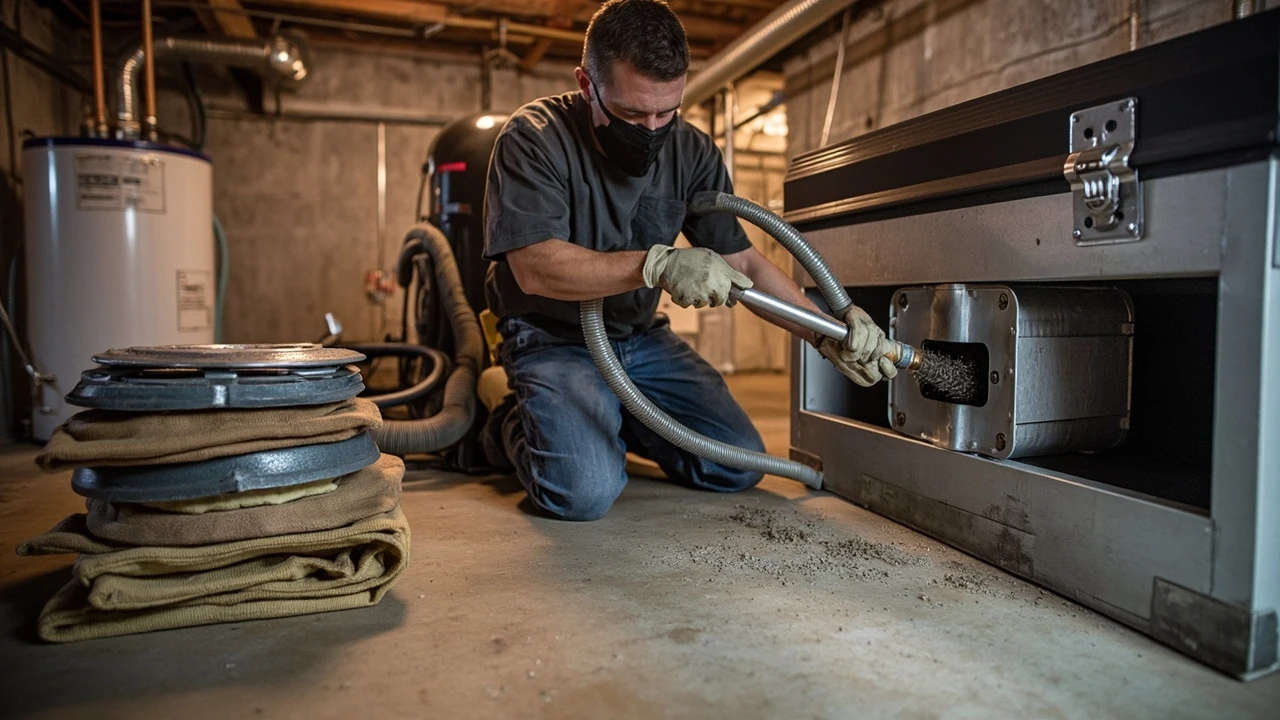

Residential air duct cleaning services: what homeowners should know
The furnace kicks on, a fine gray puff comes out of the bedroom vent, and the baby starts sneezing again. That is the kind of moment that pushes homeowners to look up residential air duct cleaning services, and it is also the kind of moment where it pays to slow down and check what is really going on. Some dust at the registers is normal. A visible cloud, a musty smell that lingers for weeks, or a return on the vent cover that looks like felt is a different situation, and the response to each is not the same.
Residential air duct cleaning services sit in an awkward place for consumers. The industry is large, fragmented, and lightly regulated at the federal level, which means price, scope, and quality can vary a great deal from one provider to the next. This guide walks through what duct cleaning actually involves, when it tends to help, when it does not, what a reasonable job looks like, and how to evaluate a company before anyone shows up at your door with a truck-mounted vacuum.
What residential air duct cleaning services actually do
At its core, residential air duct cleaning services are a mechanical cleaning of the forced-air distribution system in a home: supply trunks, branch ducts, return ducts, registers, grilles, the blower compartment, the evaporator coil housing (when accessible), and sometimes the heat exchanger area. The goal is to remove settled dust, pet hair, construction debris, dander, and, in some homes, mold growth or rodent contamination from the interior surfaces of that system.
There are two broad approaches. The first is the source-removal method recommended by the U.S. Environmental Protection Agency, in which a powerful vacuum is connected to the duct system at a cut access point or at the furnace, and agitation tools (rotary brushes, skipper balls, compressed-air whips) are pushed through each branch to dislodge material so it can be pulled back to the vacuum. The second is a less rigorous approach in which a portable vacuum is run only at the registers while the system is sealed, which tends to move dust around inside the ducts rather than remove it.
A thorough job typically involves:
- Inspecting the system, ideally with a camera, before any cleaning begins.
- Connecting a high-efficiency particulate collection vacuum, usually truck-mounted or a large portable HEPA unit, to create negative pressure inside the ductwork.
- Sealing each supply and return register so the vacuum can pull from inside the system.
- Agitating debris from each branch line back to the main trunk using a brush, whip, or compressed-air nozzle.
- Cleaning the blower, the accessible portion of the evaporator coil housing, the air handler cabinet, and the interior of the air filter rack.
- Cleaning or replacing the furnace filter once the work is complete.
What the service is not, in most cases, is a sanitizing or disinfecting process. Some companies offer an optional antimicrobial fog or spray applied after cleaning, but that is a separate step and a separate cost, and its effectiveness depends on what is being treated and which product is used.
When duct cleaning tends to make a real difference
The EPA, which is the most neutral source for guidance in the United States, has long taken a measured position. The agency does not say that every home needs routine duct cleaning, and it does not endorse duct cleaning as a way to prevent health problems. It does say that duct cleaning can be useful in a specific set of situations, and it is worth being honest with yourself about which of those applies to your house.
Duct cleaning tends to help when one or more of the following is true:
- There is visible mold growth on the interior surfaces of the ducts or on other components of the HVAC system.
- The ducts are infested with rodents or insects, or there is a persistent odor tied to biological contamination inside the system.
- There is substantial visible debris being released from the supply registers, often after a recent renovation or in a home where a previous owner smoked indoors for years.
- The home has been damaged by a flood, sewage backup, or significant water intrusion that reached the ductwork.
Duct cleaning is unlikely to help with general allergy or asthma symptoms on its own. Allergens come from many sources, including upholstered furniture, bedding, carpets, and outdoor air, and cleaning the ducts does not address those. If a family member is having respiratory symptoms, the right starting point is a conversation with a medical provider, not a duct cleaning appointment.
When duct cleaning is unlikely to be worth the money
It is worth being direct about this, because the industry has a long history of upsells based on weak claims. Residential air duct cleaning services are sometimes sold as a way to lower energy bills, reduce dust throughout the home, or extend the life of the HVAC system. Some of these claims have a kernel of truth, but they are not a reason to spend several hundred dollars on a routine basis.
You can probably skip duct cleaning, or at least postpone it, if:
- You change your furnace filter on schedule and it comes out reasonably clean at each change.
- There is no visible debris blowing out of the registers.
- There are no unusual smells coming from the system when the fan runs.
- You have not had remodeling, fire, smoke, or water damage inside the ductwork.
- No one in the home has unexplained respiratory symptoms tied to system operation.
A common upsell is a recommendation to seal or insulate ducts at the same time as cleaning. Sealing leaky ducts with mastic or approved tape is a legitimate energy-efficiency improvement, but it is a separate trade and a separate scope of work, and it should be priced and explained that way rather than folded into a duct cleaning package without consent.
How often residential ductwork should be cleaned
There is no universal schedule. The NADCA, the main U.S. trade association for the duct cleaning industry, suggests evaluating the system every few years and cleaning when there is a clear reason rather than on a fixed calendar. That matches what most experienced HVAC contractors will tell you in person.
A reasonable rule of thumb is:
- Every 2 to 5 years for most homes with no pets, no smokers, no recent renovations, and a working filter schedule.
- Every 2 to 3 years for homes with multiple shedding pets, residents with significant allergies, or smokers who have quit but smoked indoors for years.
- Immediately after a renovation that generated fine dust, a pest infestation in the ductwork, a flood, or a fire, regardless of the calendar.
None of this is a substitute for a regular filter routine. The single biggest factor in how clean your ducts stay over time is the quality and fit of the filter you use and how often it is changed. A high-MERV filter that is replaced on schedule will do more for day-to-day dust and air quality than any cleaning cycle.
What a proper residential duct cleaning should look like
A good job has a recognizable shape. The technician should arrive with industrial equipment, not a household shop vac, and should be willing to explain the steps before starting. The home should be prepared, with the technician confirming which supply and return vents exist, where the furnace and air handler are, and whether the system has been serviced recently.
During the work, you should expect:
- Drop cloths laid in the work area, especially around the furnace and the vacuum unit.
- Registers removed, photographed or labeled, and set aside.
- A vacuum connected to the trunk line, often through a 10- to 12-inch round port cut into the duct or through the air handler cabinet.
- Agitation tools inserted into each branch and worked back toward the trunk.
- Visible material being pulled into the vacuum, not just stirred up.
- Access panels reinstalled and sealed with sheet metal screws and foil tape, not left open or taped with painter’s tape.
- The blower wheel, evaporator coil area (if accessible without disassembling refrigerant components), and air filter rack cleaned before the system is restarted.
After the work, the technician should walk you through what was found, show you before-and-after images if a camera was used, and replace the filter. If any section of ductwork was found to be damaged, disconnected, or contaminated beyond cleaning, that should be documented with photos and quoted as a separate repair.
How long a residential duct cleaning takes
Time on site is one of the easiest ways to spot a low-effort job. A typical single-family home with one furnace and a moderate amount of ductwork takes about 2 to 4 hours for a two-person crew using proper equipment. Larger homes, homes with two HVAC systems, or homes with extensive returns and long trunk runs can run 4 to 6 hours. A crew that promises to clean an entire system in 60 to 90 minutes is almost certainly not doing source removal.
Two operational details that often signal a rushed job are skipping the blower compartment and not sealing the registers during vacuuming. If you see registers still in place and a single hose being moved from one to the next, that is the less rigorous method described above, and it is worth asking the crew to switch approach or to leave.
How much residential duct cleaning usually costs
Costs vary by region, by the size of the system, and by what is included. As a rough national range, a single-system home in the United States will typically see quotes in the following bands. These ranges are for planning, not a binding quote, and they assume a standard residential forced-air system with one furnace and accessible ductwork.
| Home profile | Typical scope | Approximate price range (USD) |
|---|---|---|
| Small single-family home, 1 system, easy access | Source removal, blower, registers, filter rack | $300 – $500 |
| Average single-family home, 1 system, moderate access | Source removal, blower, registers, filter rack, one return drop | $450 – $700 |
| Large single-family home, 1 system, two-story with attic runs | Source removal, blower, registers, filter rack, multiple returns | $700 – $1,000 |
| Two-system home or complex duct layout | Source removal across both systems, blower(s), registers, filter racks | $900 – $1,500 |
| Add-on services (mold treatment, sanitizer, dryer vent) | Per add-on, applied after the main cleaning | $50 – $250 each |
Quote significantly below the ranges above is a warning sign, not a deal. The labor, equipment, and insurance required to do a real source-removal job are real costs, and a low price usually means a less rigorous method or a high-pressure upsell once the crew is in the home.
What can go wrong with a bad duct cleaning
A poorly done cleaning can leave a home in worse shape than it started. Common failure modes include:
- Damage to flexible ductwork from overly aggressive brush heads, especially in attics where the duct is unsupported.
- Loosened or disconnected duct joints that were not resealed, which can pull attic or crawlspace air into the living space.
- Blower fan blades bent or damaged during cleaning, which causes noise and reduces airflow.
- Refrigerant lines or the evaporator coil damaged when an untrained technician tries to clean the coil housing.
- Residue from unapproved sanitizers or sealants left inside the ductwork, which can then be distributed through the home.
For that reason, it is worth treating duct cleaning with the same care you would give to any other trade that opens up a part of your house, including the choice of provider, the pre-work walkthrough, and the post-work inspection.
How to vet a residential duct cleaning company
The market is uneven, but it is not hard to filter it down to a short list. A few checks will eliminate most of the risky providers.
- Look for NADCA membership and ask whether the crew is led by an Air Systems Cleaning Specialist. Membership is not a guarantee of quality, but it signals that the company has invested in training and standards.
- Ask which method will be used and what equipment will be on site. A source-removal method with a truck-mounted or large portable HEPA vacuum and agitation tools is the answer you want.
- Ask for proof of general liability insurance and workers’ compensation coverage, and verify both.
- Ask whether the company is doing the work itself or subcontracting it. Subcontracting is common and not automatically a problem, but you want to know who is in your home.
- Request a written scope of work that lists the components that will be cleaned, the access points, the filter replacement, and any add-on options with their prices.
- Read recent reviews with attention to how the company handled a complaint, not just how many five-star ratings it has.
If a salesperson pushes a whole-home package on the first call, tries to scare you with photos that may or may not be from your system, or refuses to put the scope and price in writing, that is a reason to move on.
Residential air duct cleaning versus related HVAC services
Several adjacent services get confused with duct cleaning, and they are not the same thing. Knowing the difference helps you decide which one you actually need.
| Service | What it does | When it applies |
|---|---|---|
| Residential air duct cleaning | Removes settled debris from the inside of the duct system | Visible debris, odors, contamination, post-renovation |
| HVAC tune-up or maintenance | Inspects and services the furnace or air handler, including electrical, blower, and filter | Annual or biannual, regardless of duct condition |
| Coil cleaning | Cleans the evaporator or condenser coil specifically | Reduced cooling capacity, ice on the refrigerant line |
| Duct sealing | Seals leaks at joints and connections with mastic or approved tape | High energy bills, rooms that never reach temperature |
| Dryer vent cleaning | Clears the flexible or rigid vent from the dryer to the outside | Long drying times, hot dryer, visible lint at the exterior cap |
| Indoor air quality assessment | Measures particles, humidity, and gas levels in the home | Ongoing respiratory symptoms, suspected combustion issues |
A credible duct cleaning company will tell you when one of these other services is the better fit, and in some cases will refer you back to your regular HVAC contractor.
How duct cleaning interacts with the rest of the home
Duct cleaning is one piece of a much larger indoor environment picture. Once the ducts are clean, they will get dirty again at a rate set by the rest of the house. A few habits keep them cleaner for longer and reduce how often the service is needed:
- Use a filter rated MERV 8 to 13 that matches the equipment. Higher MERV is not always better if it restricts airflow, so check the furnace manufacturer’s maximum rating.
- Replace the filter on a set schedule. A simple phone reminder tied to the first day of each season is enough for most homes.
- Vacuum regularly with a sealed-system vacuum, ideally one with a HEPA exhaust.
- Run the bathroom and kitchen exhaust fans during and after activities that generate moisture, so humidity does not settle inside the ductwork.
- Schedule a furnace tune-up every year or two, including a quick visual check of the return side of the system.
If your home is in a region with wildfire smoke, high pollen counts, or frequent dust events, those factors may justify a more aggressive filter schedule and a shorter interval between duct evaluations.
Questions to ask before booking residential air duct cleaning services
Before you sign anything, a short conversation with the company can save you a frustrating afternoon. These questions also help you compare one quote to another on equal terms.
- What method will you use, and is it source removal with negative pressure?
- What equipment will be on site, and where will the vacuum be located?
- Which components of the system are included, and which are add-ons?
- Will you provide before-and-after photos or video of the inside of the ducts?
- How long do you expect the job to take for a home my size?
- Are you insured, and can you send a certificate of insurance before the appointment?
- What does the warranty or satisfaction guarantee cover, and in writing?
- If you find damaged ductwork, contaminated insulation, or mold, how is that handled and priced?
Two or three companies should answer these in roughly the same way. The outlier, in either direction, is the one to ask more questions about.
What the EPA and consumer regulators actually say
The U.S. Environmental Protection Agency publishes a straightforward consumer guide on duct cleaning. It does not require duct cleaning, it does not certify duct cleaners, and it does not list approved chemicals for use inside ductwork. It does recommend source removal when cleaning is needed, and it warns consumers to be skeptical of claims that duct cleaning will prevent health problems or dramatically improve health in a general way. State and local agencies add rules in some jurisdictions, particularly around licensing, advertising, and the handling of antimicrobial products, so a quick check of your state attorney general’s consumer protection page is worth ten minutes.
The Federal Trade Commission has also taken action over the years against duct cleaning companies that used scare tactics, fabricated mold samples, or made health claims that the companies could not support. A company that talks openly about what it can and cannot do, and that documents its work, is the kind of company that does not end up in an FTC complaint.
A short pre-appointment checklist for homeowners
Two or three days before the crew arrives, a few small steps make the job smoother and the result better.
- Clear a path to the furnace or air handler, including any items stored within a few feet of the unit.
- Make sure all supply and return registers are accessible, and note any that are painted shut, stuck, or missing a screw.
- Identify a parking spot for a truck or van near an exterior wall or garage, so the vacuum hose can reach the system.
- Secure pets in a separate room, since the equipment is loud and unfamiliar.
- Note any known issues, such as a room that never heats up, a vent that rattles, or a smell that has been bothering you, so the technician can investigate rather than just clean around the problem.
Frequently asked questions
How long does residential duct cleaning take for an average home?
For a single-system home with a moderate amount of ductwork, a two-person crew using proper source-removal equipment usually needs 2 to 4 hours on site. Larger homes, two-story homes with attic runs, or homes with two systems can run 4 to 6 hours. A crew that promises to finish in 60 to 90 minutes is almost certainly not doing a source-removal job.
Is duct cleaning covered by homeowners insurance?
Standard homeowners policies do not cover routine duct cleaning. Coverage can apply if the ducts were damaged by a covered event, such as a fire, a burst pipe, or a storm, and the cleaning is part of the repair. In that case, the work is handled through a property claim, and the carrier usually chooses or approves the contractor.
Will duct cleaning lower my energy bills?
It can, in a limited way, if the ducts are heavily soiled or if the blower is significantly obstructed. In most homes with a normal filter routine, the energy impact of cleaning alone is small. The bigger energy wins come from sealing leaky ducts, setting the blower speed correctly, and keeping the filter clean.
Can duct cleaning remove mold from my HVAC system?
If the mold is on the inside of accessible ductwork or on the blower and coil housing, source removal can address it, followed by an EPA-registered antimicrobial if appropriate. If the mold is inside the evaporator coil, the fiberglass insulation on the air handler, or behind drywall, duct cleaning alone will not fix it, and a broader remediation plan is needed.
How do I know if my ducts are actually dirty?
Look at a return register with a flashlight, not a supply register, since returns pull air in and accumulate more material. A thin, even layer of light gray dust is normal. A felt-like coating, visible hair, debris clumps, or dark spots are reasons to ask for a camera inspection before committing to a cleaning.
Do I need to leave the house during duct cleaning?
You do not have to, but it is a good idea to stay out of the work area, keep windows closed so the vacuum can maintain negative pressure, and keep pets and children in a separate room. The equipment is loud, and the technicians need clear access to the furnace and the ducts.
What is the difference between a $200 duct cleaning and an $800 duct cleaning?
The most common difference is method and scope. A $200 job often uses a portable vacuum run at the registers, skips the blower and coil housing, and is sold as a loss leader with on-site upsells. An $800 job typically uses a truck-mounted HEPA vacuum, includes the blower and accessible coil area, documents the work with photos, and is performed by a trained two-person crew. The cost reflects equipment, labor, and insurance, not just the visible time on site.
Should ducts be cleaned after a home renovation?
Yes, in most cases. Fine construction dust settles inside the return side of the system and gets recirculated for months if the ducts are not cleaned. A short return to a normal filter schedule is not enough to clear the fine material that ends up in branch runs and the air handler.
Are chemical sanitizers necessary after duct cleaning?
Not in most homes. Sanitizers are useful when there is a documented biological issue, such as mold or rodent contamination, and an EPA-registered product applied at the right concentration is appropriate. For a routine cleaning, sanitizers add cost without a clear benefit, and a good company will explain when they are and are not warranted.
How do I keep my ducts clean after the service?
Use a filter rated for the equipment, replace it on a set schedule, vacuum regularly with a sealed-system vacuum, run exhaust fans when cooking or showering, and have the furnace serviced annually. A short visual check of the return side of the system once a year is enough to catch problems before they require another full cleaning.